
Where it took place
| Type | Place |
|---|---|
| Region | Africa |
| Country | Cameroon |
Campaign at a glance
In 1991, opposition parties and citizens in Cameroon launched a general strike called Operation Ghost Town to demand democratic election reforms and an end to President Paul Biya’s rule [source: nv-database]. The strike effectively shut down seven of ten provinces for months, but the government’s violent repression and external financial support allowed it to withstand the pressure. The campaign ended with a negotiated agreement that fell short of the opposition’s goals, and Biya was re-elected in 1992 amid fraud allegations [source: nv-database].
Tactics used
- [boycotts-and-strikes
- nonviolent direct action
- civil-resistance
- coalition building
Background
President Paul Biya and his ruling party, the Cameroonian People’s Democratic Movement, had maintained a stronghold on governance since 1982, supported by France [source: nv-database]. In 1989, attorney Yondo Black formed a new major party, challenging Biya’s rule, and was arrested in 1990 [source: nv-database]. This sparked the formation of opposition parties like the Social Democratic Front, which faced violent government crackdowns. The opposition coalition demanded a sovereign national conference to establish democratic election procedures and address Biya’s abuses [source: nv-database].
What happened
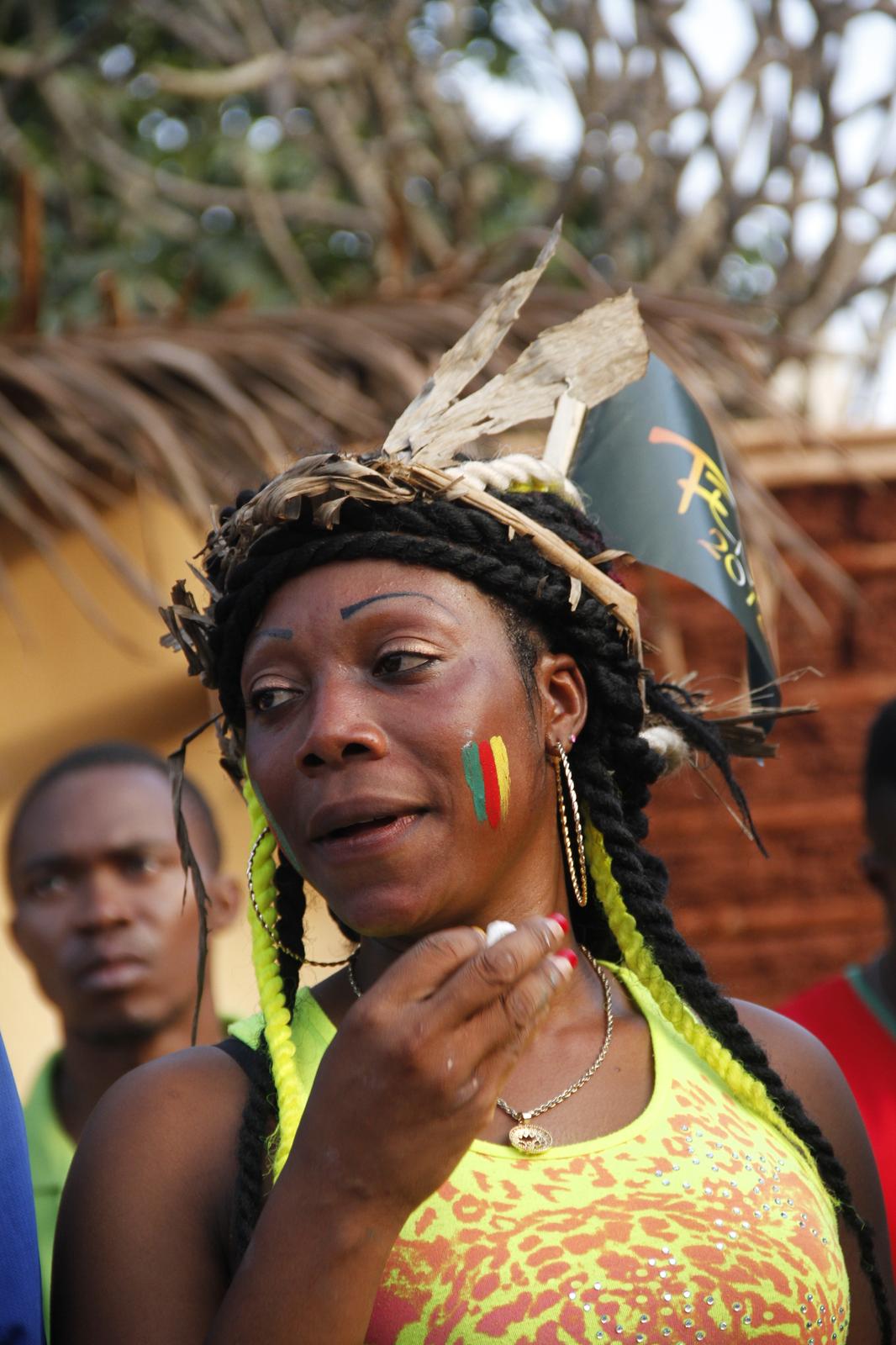
Lead photo. — Happiraphael (CC BY-SA 4.0). Source: cameroonians-general-strike-for-democratic-elections-1991.jpg

In April 1991, eight pro-democracy demonstrators were killed and nearly 300 students were detained after security forces attacked the University of Yaounde [source: nv-database]. On June 25, the National Coordination Committee of Opposition Parties declared a mass general strike called Operation Ghost Town, aiming to shut down cities Monday through Friday, with businesses open on weekends [source: nv-database]. The strike effectively paralyzed seven of ten provinces, most strongly in the South, Littoral, West, Northwest, and Southwest provinces [source: nv-database]. The government responded by sending Operation Commanders to seven provinces with authority to use excessive force, and in July banned six opposition-affiliated organizations [source: nv-database]. The administration also established the New Censorship Authority to monitor the press, confiscating independent newspapers like Le Messager and banning seven more in August [source: nv-database]. On September 4, dozens of journalists marched peacefully to protest the bans; several were injured and nearly forty detained [source: nv-database]. By October, the strike’s economic strain on businesses and people, combined with violent repression and the government’s continued functioning, led many opposition parties to negotiate on Biya’s terms [source: nv-database]. In late October, a trilateral conference was held with government, some opposition parties, and civil society, but the government’s agenda fell far short of opposition demands [source: nv-database]. In late November, forty-one political parties signed an agreement with the government, though the Social Democratic Front did not [source: nv-database]. Presidential elections in October 1992 saw Biya re-elected with 40% of the vote amid widespread fraud accusations [source: nv-database].
Key people & organizations
- John Fru Ndi
- Maigari Bello Bouba
- Union des Populations du Cameroun
- National Coordination Committee of Opposition Parties (NCCOP)
- Social Democratic Front (SDF)
- National Union for Democracy and Progress (UNDP)
- President Paul Biya
- Cameroonian People’s Democratic Movement (CPDM)
Outcome
Verdict: partial.
The campaign did not achieve its primary goal of establishing democratic election procedures, as the negotiated agreement fell short and Biya remained in power after a flawed election. However, the movement survived, grew significantly, and some political infrastructure remained in place, earning a partial outcome. [source: nv-database]
Lessons
- A general strike can effectively disrupt a national economy, but its success depends on the target’s ability to withstand economic pressure through external support.
- Violent repression can demoralize and fragment a movement, especially when combined with the economic strain of a prolonged strike on participants.
- Coalition-building across multiple parties can amplify pressure, but internal divisions and differing interests may weaken the movement’s bargaining position.
Sources
- Global Nonviolent Action Database —
nv-database
Disclaimer: Included as a teaching example of campaign craft, not as endorsement.
Sources & verification
nv-database— grounding: primary — license: link-only- Rewritten: 2026-06-25 via
worker_casestudies_v2.py