
Where it took place
| Type | Place |
|---|---|
| Region | Latin America |
| Country | Ecuador |
Campaign at a glance
In April 2005, Ecuadorian citizens in Quito mobilized to remove President Lucio Gutiérrez after he dissolved the Supreme Court and appointed loyalist justices [source: nv-database]. The campaign, known as the Rebellion of the Forajidos, used strikes, marches, and civil disobedience to force Gutiérrez from office. After a week of protests, Congress voted to remove him, and he fled to the Brazilian embassy.
Tactics used
- boycotts and strikes
- nonviolent direct action
- civil-resistance
- coalition building
- distributed organizing
- dilemma actions
- framing and narrative
- escalation
- citizen lobbying
- petitions and e campaigning
- public-narrative
- power-mapping
- methods-of-nonviolent-action
Background
President Lucio Gutiérrez, elected in 2002, increased the country’s IMF debt and approved oil exploitation on indigenous land [source: nv-database]. In December 2004, he dissolved the Supreme Court and appointed loyalist justices, sparking protests [source: nv-database]. The campaign aimed to remove Gutiérrez from the presidency.
What happened
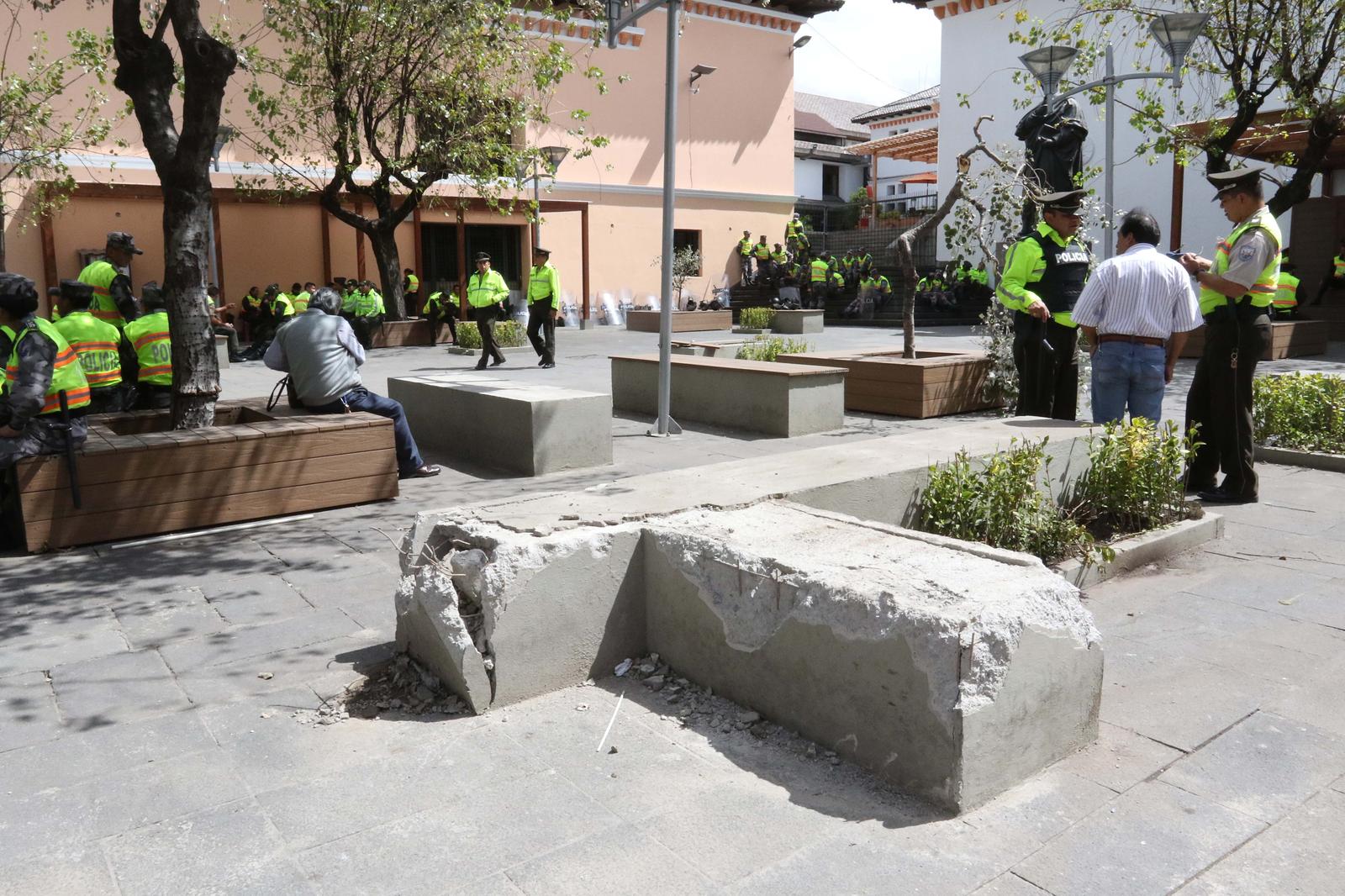
Lead photo. — Agencia de Noticias ANDES (CC BY-SA 2.0). Source: ecuadorians-oust-president-guti-rrez-rebellion-forajidos-2005.jpg

On 13 April 2005, thousands in Quito participated in a strike that shut down public transportation, education, and government buildings, while Mayor Moncayo read the constitution aloud in a plaza [source: nv-database]. That evening, a woman’s call to Radio La Luna sparked a spontaneous protest of 10,000 people, mostly women and children, who marched to the Supreme Court banging pots and waving flags [source: nv-database]. On 14 April, protesters visited Gutiérrez’s home; he called them ‘forajidos’ (outlaws), which became the campaign’s name [source: nv-database]. On 15 April, 15,000 people gathered, and Gutiérrez declared a state of emergency, but the Army commander opposed it, and the president lifted it the next day [source: nv-database]. Radio La Luna coordinated actions, including a call for people to bring toilet paper to symbolize cleaning up corruption [source: nv-database]. Police repression on 19 April killed a Chilean photographer and wounded many, but on 20 April, the chief of police resigned, the military withdrew support, and Congress voted to remove Gutiérrez [source: nv-database]. Protesters blocked the airport to prevent his escape, but he fled by helicopter to the Brazilian embassy [source: nv-database].
Key people & organizations
- Paco Velasco
- Radio La Luna
- Mayor Paco Moncayo
- General Luis Aguas
- Victor Hugo Rosero
- President Lucio Gutiérrez
- Gen. Jorge Poveda
- Alfredo Palacio
- Rafael Correa
Outcome
Verdict: won.
The campaign succeeded in ousting Gutiérrez within a week, as Congress voted to remove him and key elites withdrew support. While some hoped for more lasting change, the victory led to a new constitution in 2007 under President Correa, which expanded rights for indigenous people, women, and others. [source: nv-database]
Lessons
- A single radio station can serve as a powerful coordination hub for decentralized protests.
- Turning an opponent’s insult into a unifying identity can strengthen movement solidarity.
- Withdrawal of support by military and police elites can be decisive in nonviolent regime change.
Sources
- Global Nonviolent Action Database —
nv-database
Disclaimer: Included as a teaching example of campaign craft, not as endorsement.
Sources & verification
nv-database— grounding: primary — license: link-only- Rewritten: 2026-07-04 via
worker_casestudies_v2.py