
Where it took place
| Type | Place |
|---|---|
| Region | Latin America |
| Country | Ecuador |
Campaign at a glance
In May 1944, a broad coalition of Ecuadorians, including students, indigenous peoples, peasants, women, intellectuals, and lower-ranking military personnel, launched a largely nonviolent campaign to overthrow President Carlos Arroyo del Río [source: nv-database]. The uprising, known as the Glorious May Revolution, began in Guayaquil and spread to Quito and other cities, culminating in Arroyo’s resignation on May 31 [source: nv-database]. Although the campaign achieved its primary goal of ousting the dictator, the subsequent presidency of José María Velasco Ibarra quickly reversed democratic reforms, leading to another dictatorship.
Tactics used
- unknown
Background
By the early 1900s, Ecuadorian politics were corrupt, and economic hardship from the 1929 stock market crash worsened conditions [source: nv-database]. President Carlos Arroyo del Río, elected in 1940 amid allegations of fraud, faced widespread discontent due to declining living standards, hyperinflation, and repression of strikes by the carabineros [source: nv-database]. A coalition called the Alianza Democratica Ecuatoriana (ADE) formed to oust Arroyo and establish democracy, supporting ex-president José María Velasco Ibarra as a populist figurehead.
What happened
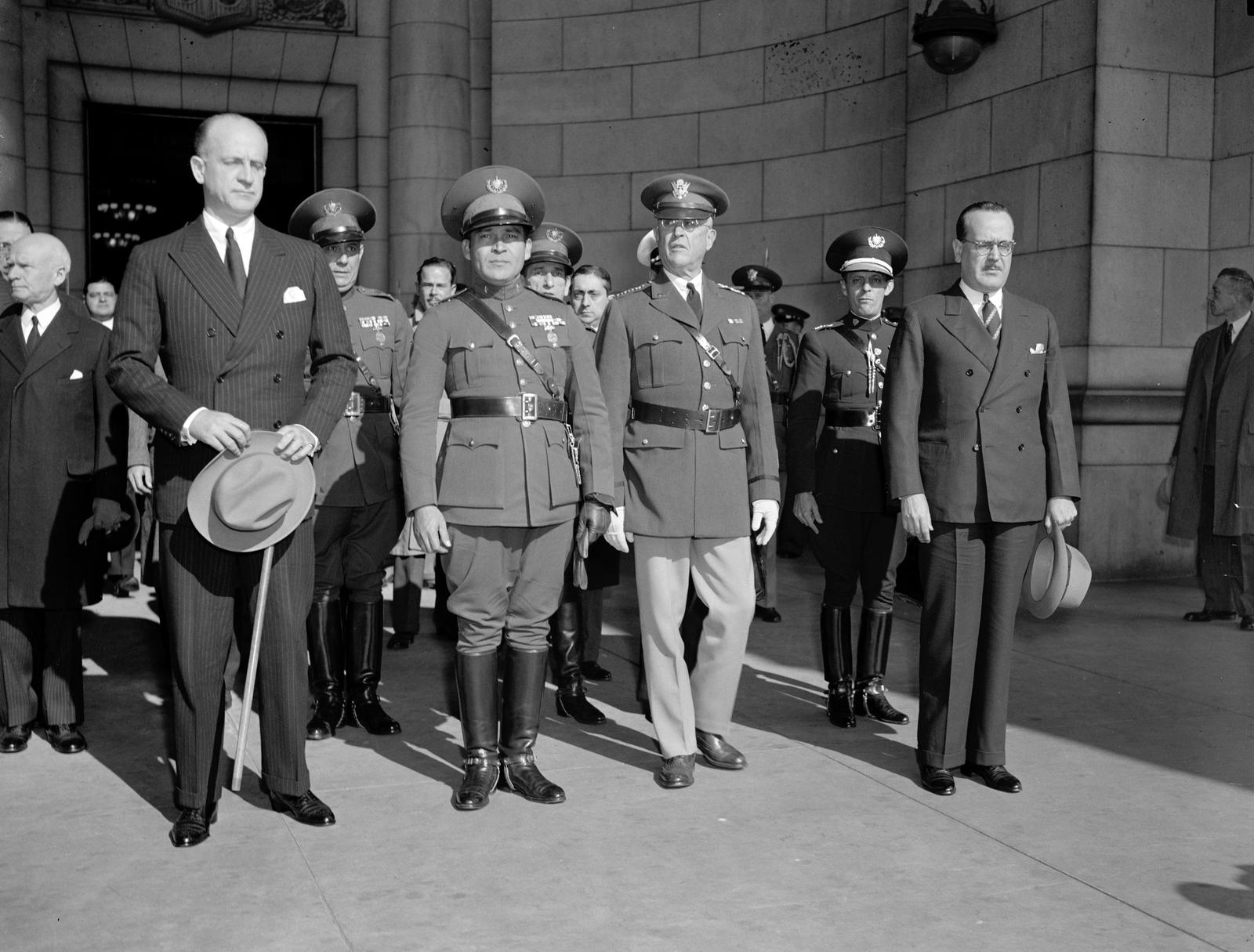
Lead photo. — Wikimedia Commons contributor (Public domain). Source: ecuadorians-overthrow-dictator-glorious-may-revolution-1944.jpg

On May 28, 1944, at 10pm, the army revolted in Guayaquil, capturing carabineros and burning their barracks, while some civilians armed themselves against troops, resulting in injuries and casualties [source: nv-database]. The next morning, women, students, indigenous peoples, peasants, intellectuals, lower-ranking military personnel, Communists, and Catholics marched through Guayaquil singing, carrying portraits of Velasco, and chanting slogans like ‘Democracy with Velasco Ibarra!’ [source: nv-database]. Similar demonstrations occurred in Quito, Cuenca, Cayambe, and Riobamba, where students patrolled streets and protestors encircled governmental buildings, including the Government Palace [source: nv-database]. On May 31, Arroyo del Río resigned, and the ADE governed as a junta until Velasco Ibarra arrived in Quito [source: nv-database]. Velasco’s subsequent presidency saw the crafting of Ecuador’s most progressive constitution in 1945, but he quickly reversed these gains with a 1946 constitution that crippled reforms for workers, indigenous peoples, and women, becoming increasingly dictatorial [source: nv-database].
Key people & organizations
- Carlos Arroyo del Río
- José María Velasco Ibarra
- Alianza Democratica Ecuatoriana (ADE)
- Partido Socialista del Ecuador (PSE)
- Partido Comunista del Ecuador (PCE)
- Liberal-Radical Party
Outcome
Verdict: won.
The campaign succeeded in overthrowing Arroyo del Río, its primary goal, but failed to establish lasting democracy or fair elections, as Velasco Ibarra soon became a dictator. However, it laid groundwork for future movements by founding the Confederación de Trabajadores del Ecuador and the Federación Ecuatoriana de Indios, and its 1945 constitution influenced later charters. [source: nv-database]
Lessons
- A broad coalition uniting diverse social groups can rapidly topple a regime, even without centralized leadership.
- Populist figureheads can mobilize mass support, but their personal ambitions may undermine democratic outcomes.
- Nonviolent tactics can be effective even when adopted pragmatically rather than from principled commitment.
Sources
- Global Nonviolent Action Database —
nv-database
Disclaimer: Included as a teaching example of campaign craft, not as endorsement.
Sources & verification
nv-database— grounding: primary — license: link-only- Rewritten: 2026-06-25 via
worker_casestudies_v2.py