
Where it took place
| Type | Place |
|---|---|
| Region | Africa |
| Country | Egypt |
Campaign at a glance
On New Year’s Eve, in 2010, Islamic militants attacked the Saints Church in Alexandria, raising tensions and concerns about religious violence in Egypt. The attack was only the most recent occurrence of religious violence and militancy in Egypt. [source: nv-database]
Tactics used
- protests
Background
On New Year’s Eve, in 2010, Islamic militants attacked the Saints Church in Alexandria, raising tensions and concerns about religious violence in Egypt. The attack was only the most recent occurrence of religious violence and militancy in Egypt. Many Egyptians perceived the issue as an epidemic, as well as the failings of the Egyptian government to ensure the right to freedom of religious beliefs. The growing resentment of government inaction and lack of representation led to the Egyptian majority taking matters into their own hands through a campaign to address the issue. The attack sparked an outcry from Egyptians, and millions expressed sentiment for Muslim-Coptic solidarity by changing Facebook profile pictures to images of a cross rested inside of a crescent – a symbol for Islam-Coptic unity. Mohamed El-Sawy, de facto leader of the human shield campaign, thought that it would be a good idea for Muslim Egyptians to demonstrate and show solidarity with the Coptic Egyptian minority. His idea involved the creation human barriers around Coptic churches, to protect Coptic Egyptians and ensure that they could safely attend their Christmas services. This act would both serve the concrete goal of protecting Coptic Egyptians from persecution and victimization on their Christmas, as well as serve as a symbolic act that shows solidarity amongst all Egyptians, and a desire for an Egypt free of religious militancy and persecution. Mohamed organized Egyptian Muslims by spreading word of his idea by distributing flyers through his cultural centre. In the wake of the attack on the Coptic church, banners promoting Egyptian unity were flown throughout Alexandria. On the Copti Protect Egyptian Coptics from militant extremism, promote solidarity and unity amongst Egpytians, address and demonstrate the need of representation and accountability from the government. [source: nv-database]
What happened
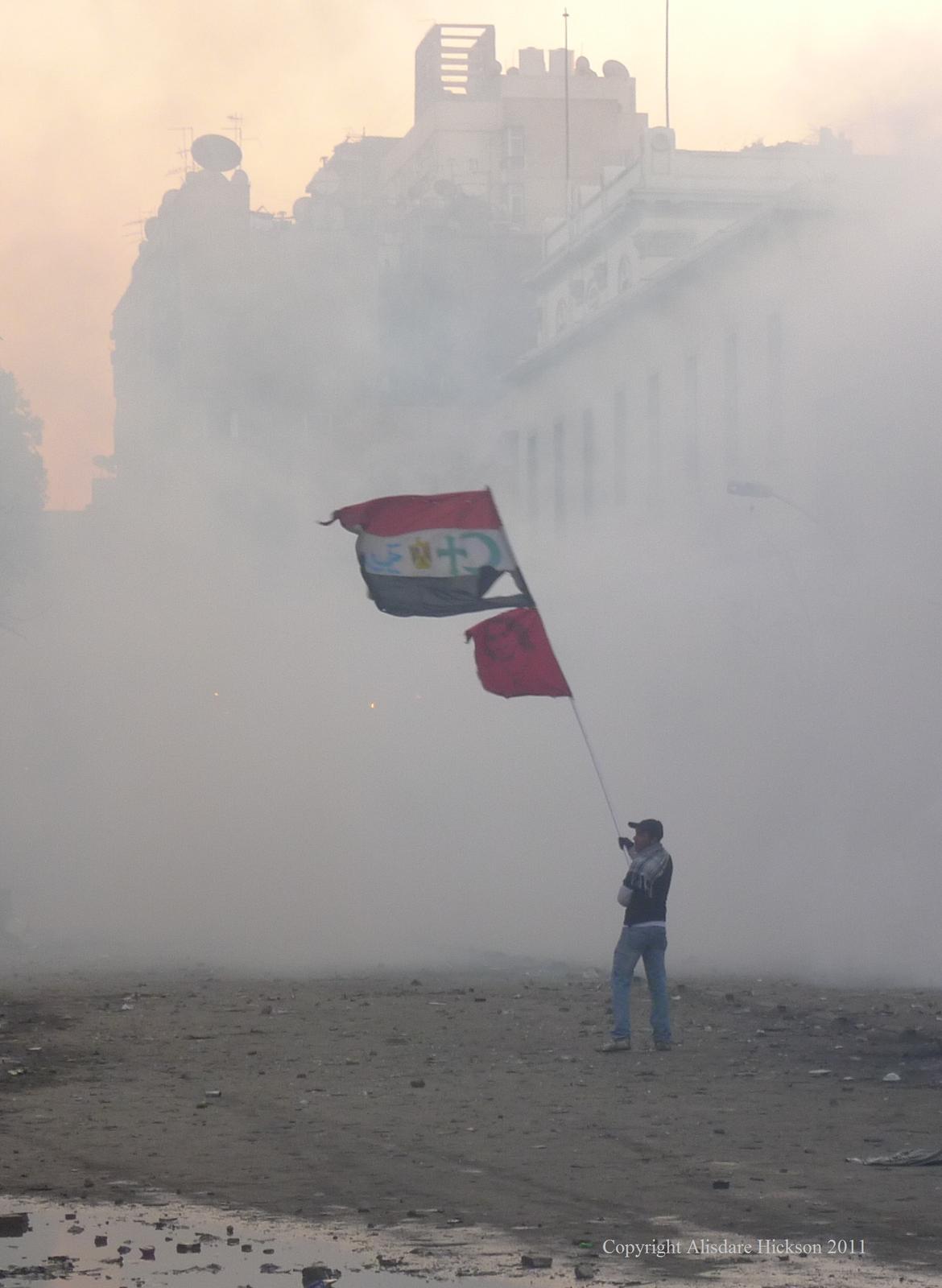
Lead photo. — Alisdare Hickson from Woolwich, United Kingdom (CC BY-SA 2.0). Source: egyptian-muslims-create-human-barriers-to-protect-coptic-egyptians-and-stand-against-religious-militancy-and-government-inaction-2011.jpg

ority. His idea involved the creation human barriers around Coptic churches, to protect Coptic Egyptians and ensure that they could safely attend their Christmas services. This act would both serve the concrete goal of protecting Coptic Egyptians from persecution and victimization on their Christmas, as well as serve as a symbolic act that shows solidarity amongst all Egyptians, and a desire for an Egypt free of religious militancy and persecution. Mohamed organized Egyptian Muslims by spreading word of his idea by distributing flyers through his cultural centre. In the wake of the attack on the Coptic church, banners promoting Egyptian unity were flown throughout Alexandria. On the Coptics’ Christmas, January 7th, of 2011, thousands of Muslims attended to participate and protect Coptic Egyptians throughout the country. Several prominent Egyptians made appearances and participated in the human shield campaign. These prominent figures included the actor Adel Imam, televised Muslim preacher Amr Khaled, and two of Hosni Mubarak’s sons. Dalia Mustafa, one of the campaign’s participants said that he was participating because, “The only way things will change in this country is if we come together.” Cherine Mahomed, another demonstrator, shared thoughts that parallel Mustafa’s. She, similarly, stated that, “We either live together, or die together, we are all Egyptians.” The campaign successfully averted possible violence against Egyptians on the night of action, raised awareness of the lack of representation and the lack of protection received from the Egyptian government. It also sent an overall message that Egyptians would not tolerate militancy and religious violence. The campaign, however, did not receive a response from the Egyptian government. Due to the human shield campaign’s proximity to the much larger Egyptian Revolution of 2011, the campaign could possibly have been influenced by, and a part of, the overarching Arab Spring movement. Research Notes [source: nv-database]
Key people & organizations
- Mohamed El-Sawy [source: nv-database]
- Not Known. [source: nv-database]
- Not Known. [source: nv-database]
- Opponents: Islamic Militants, Government. [source: nv-database]
- Classification: Change; Third-party nonviolent intervention [source: nv-database]
Outcome
Verdict: won.
There was no known violence against Coptic Egpytians on the night the human barricades were made. The campaign successfully sent the message that Egyptians will not tolerate religious militancy. The campaign received a great deal of media attention. Although the campaigners successfully received media attention, and were able to voice their frustrations with the lack of representation and the government’s failure to protect Egyptians from extremist violence, the campaign did little about it in comparison to the overarching Egpytian Revolution that began a number of weeks later. [source: nv-database]
GNVAD scoring: survivalgoals=0.5 out of 1 points, total points=6.5 out of 10 points, growth=2 out of 3 points [source: nv-database]
Lessons
- Sustained nonviolent action can shape public perception and force concessions even when immediate demands are not met.
- Cross-class, cross-sectarian, or cross-partisan coalitions amplify reach and dilute regime repression.
Sources
- Global Nonviolent Action Database —
nv-database
Disclaimer: Included as a teaching example of campaign craft, not as an endorsement.
Sources & verification
nv-database— grounding: primary — license: link-only- Last verified: 2026-07-04