
Where it took place
| Type | Place |
|---|---|
| Region | Latin America |
| Country | El Salvador |
Campaign at a glance
From late April to May 9, 1944, a federation of students, professionals, shopkeepers, market women, and blue-collar workers ran a coordinated “huelga de brazos caídos” (“arms at your side” stay-at-home strike) that stopped El Salvador’s economy and forced General Maximiliano Hernández Martínez to resign, ending 12 years of dictatorship. [source: nv-database] The campaign scored 10 of 10 on the source’s rubric — full marks on demand achievement, group survival, and growth. [source: nv-database]
Tactics used
- general-strike
- marches
- declarations-by-organizations-and-institutions
- nonviolent direct action
Background
General Maximiliano Hernández Martínez had come to power via coup in the early 1930s, then extended it by outlawing the Communist Party, banning peasant organizations, censoring the press, imprisoning perceived dissidents, and centralizing control over universities. [source: nv-database] In 1938 he proposed amending the constitution to allow himself a third consecutive term. Despite the National Assembly granting a one-time suspension of the consecutive-term ban, opposition kept growing — students and faculty resented his control of academic appointments and professional licensing, newspaper editors bristled at censorship, and junior officers objected to the concentration of privileges. [source: nv-database]
In April 1944 an armed uprising failed and was violently suppressed. In response, medical students wore black ties as mourning for those killed. The following week, students began planning a nationwide stay-at-home strike. [source: nv-database]
What happened
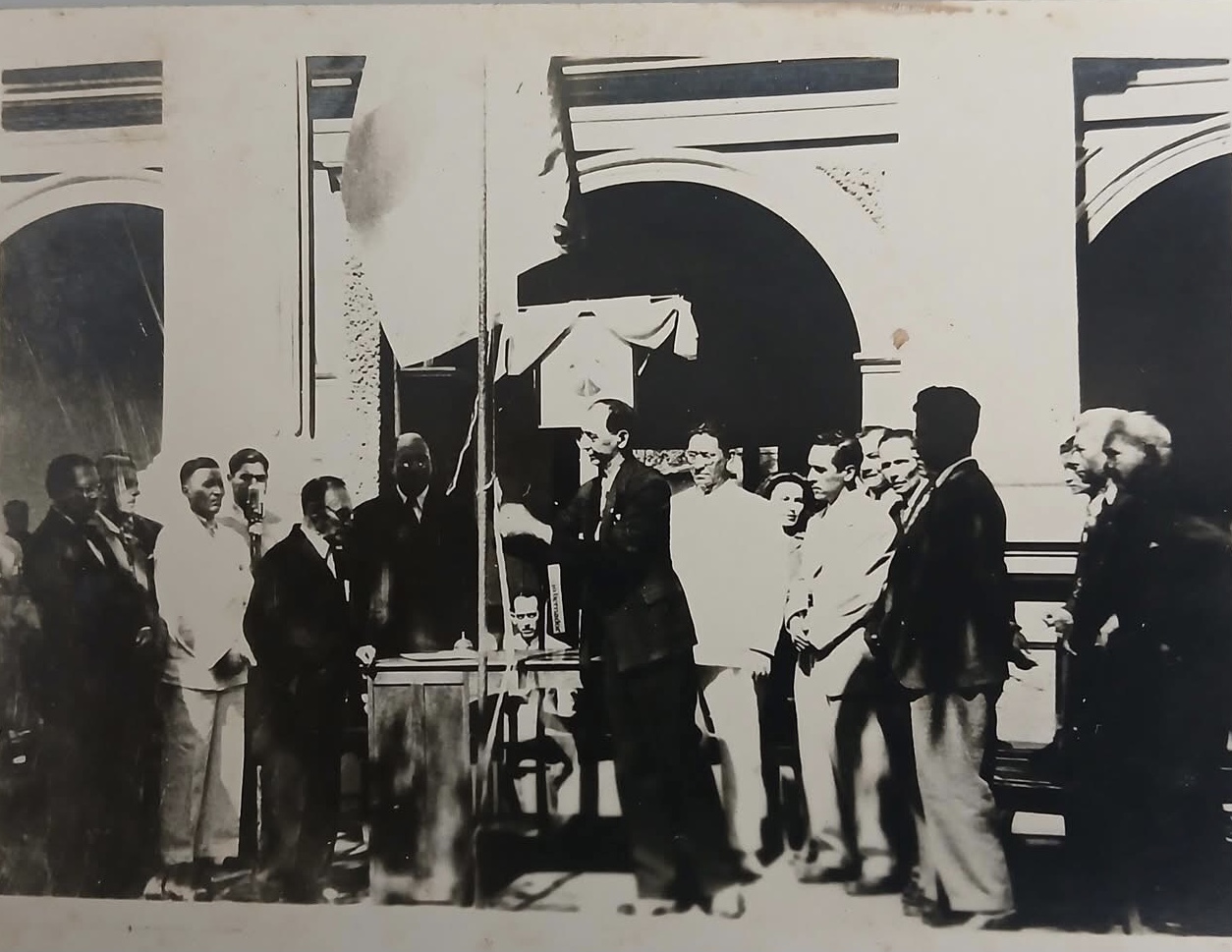
Lead photo. — Anónimo (Public domain). Source: el-salvadorans-bring-down-dictator-1944.jpg

The strike, called “huelga de brazos caídos,” went into effect during the first week of May 1944. Doctors, lawyers, dentists, teachers, pharmacists, engineers, shopkeepers, market women, laborers, technicians, theater employees, and bank, railroad, and electric-utility workers all joined; many simply stayed indoors as the students had urged in their leaflets. [source: nv-database] Police tried to force people back to work, but strikers continued to stay at home or to walk off the job if pressured. The country came to a standstill.
Government officials, accustomed to defeating violent revolts, floundered when confronted with a coordinated nonviolent shutdown. The student organizers — Fabio Castillo, Jorge Bustamante, Galindo Pohl, Jorge Mazzini, Raúl Castellanos, and Mario Colorado — circulated leaflets and informed the US embassy that the campaign would remain peaceful. The government arrested a few leaflet-holders, released all prisoners taken after the failed April coup, and tried to discredit the strike as a movement for upper-class interests, but to no effect. [source: nv-database]
On May 5, the strikers formed the National Reconstruction Committee — a student, a retired general, a physician, a lawyer, and a commercial employee — to negotiate on their behalf. The Committee’s list of demands included the president’s immediate resignation. [source: nv-database]
On May 7, a police officer shot and killed a youth. The funeral drew thousands to Plaza Barrios, near the National Assembly and government offices, and within hours many of Martínez’s ministers had resigned. [source: nv-database]
On May 8, Martínez met for hours with the National Reconstruction Committee. By the end of the meeting he had agreed to resign. He formally stepped down on May 9, 1944, and a transitional government prepared free elections. [source: nv-database]
Key people & organizations
- General Maximiliano Hernández Martínez — the deposed president
- Fabio Castillo, Jorge Bustamante, Galindo Pohl, Jorge Mazzini, Raúl Castellanos, Mario Colorado — student leaders
- The National Reconstruction Committee — student, retired general, physician, lawyer, and commercial employee, formed May 5 to negotiate the campaign’s demands
- Doctors, lawyers, dentists, teachers, pharmacists, engineers — the professional backbone of the strike
- Shopkeepers, market women, and laborers who shut the economy from below
Outcome
Verdict: won.
The campaign scored 6 of 6 on achieving its specific demands — Martínez resigned on May 9, 1944, an interim government took over, and free elections followed. Survival was full (1 of 1): the National Reconstruction Committee and the student leaders persisted into the post-Martínez period. Growth was full (3 of 3): the movement spanned students to professionals to market women. [source: nv-database]
Lessons
- A stay-at-home strike is more enforceable than a walkout: it requires no public visibility, denies police a target to beat, and pre-empts the regime’s only tactic (forced return to work).
- A coalition that explicitly includes both professionals (doctors, lawyers) and informal-sector workers (market women, day laborers) is far harder to discredit as “elitist.”
- Negotiating bodies that include retired generals give a regime a face-saving exit; here the National Reconstruction Committee had both a student and a retired general, which eased Martínez’s path to resignation.
Sources
Disclaimer: Included as a teaching example of campaign craft, not as endorsement.
Sources & verification
nv-database— grounding: primary — license: link-only / all-rights-reserved (ND-style; content paraphrased, not quoted)- Verified: 2026-07-04 by human