
Where it took place
| Type | Place |
|---|---|
| Region | Oceania |
| Country | Fiji |
Campaign at a glance
After Commodore Frank Bainimarama executed Fiji’s fourth coup on 4-5 December 2006, Fijian church leaders, lawyers and civil-society organisations organised a sustained nonviolent opposition [source: wikipedia] . Unlike the 2000 Speight coup, which “was marked by looting and burning of businesses”, the post-2006 protests were “smaller and less violent” [source: wikipedia] . On 7 December 2006 the Great Council of Chiefs called the coup illegal and asked soldiers to “leave the barracks and return home to your people”; the Methodist Church president led a delegation to the deposed PM while he was under house arrest; the Anglican Archbishop and Pacific Conference of Churches issued statements; ecumenical newspaper ads (including one by Reverend Tuikilakila Waqairatu, president of the Fiji Council of Churches, calling the takeover “the manifestation of darkness and evil”) ran in major papers [source: wikipedia] . Legal challenges continued through 2009: on 9 April 2009 the Fiji Court of Appeal ruled the coup “had not been legal” and called for new elections [source: wikipedia] .
Tactics used
- mass-meeting
- public-speeches
- petitions and e campaigning
- civil-resistance
- signed-public-statements
Background
The 2006 coup was the culmination of a long-running conflict between PM Laisenia Qarase and Commodore Bainimarama over three bills: the Reconciliation, Tolerance, and Unity Bill (amnesty for some 2000 coup participants), the Qoliqoli Bill (handing seabed resources to ethnic Fijians), and the Land Tribunal Bill [source: wikipedia] . Bainimarama issued a nine-demand ultimatum on 16 October 2006; after failed negotiations in New Zealand, the military launched the coup on 4 December [source: wikipedia] .
What happened
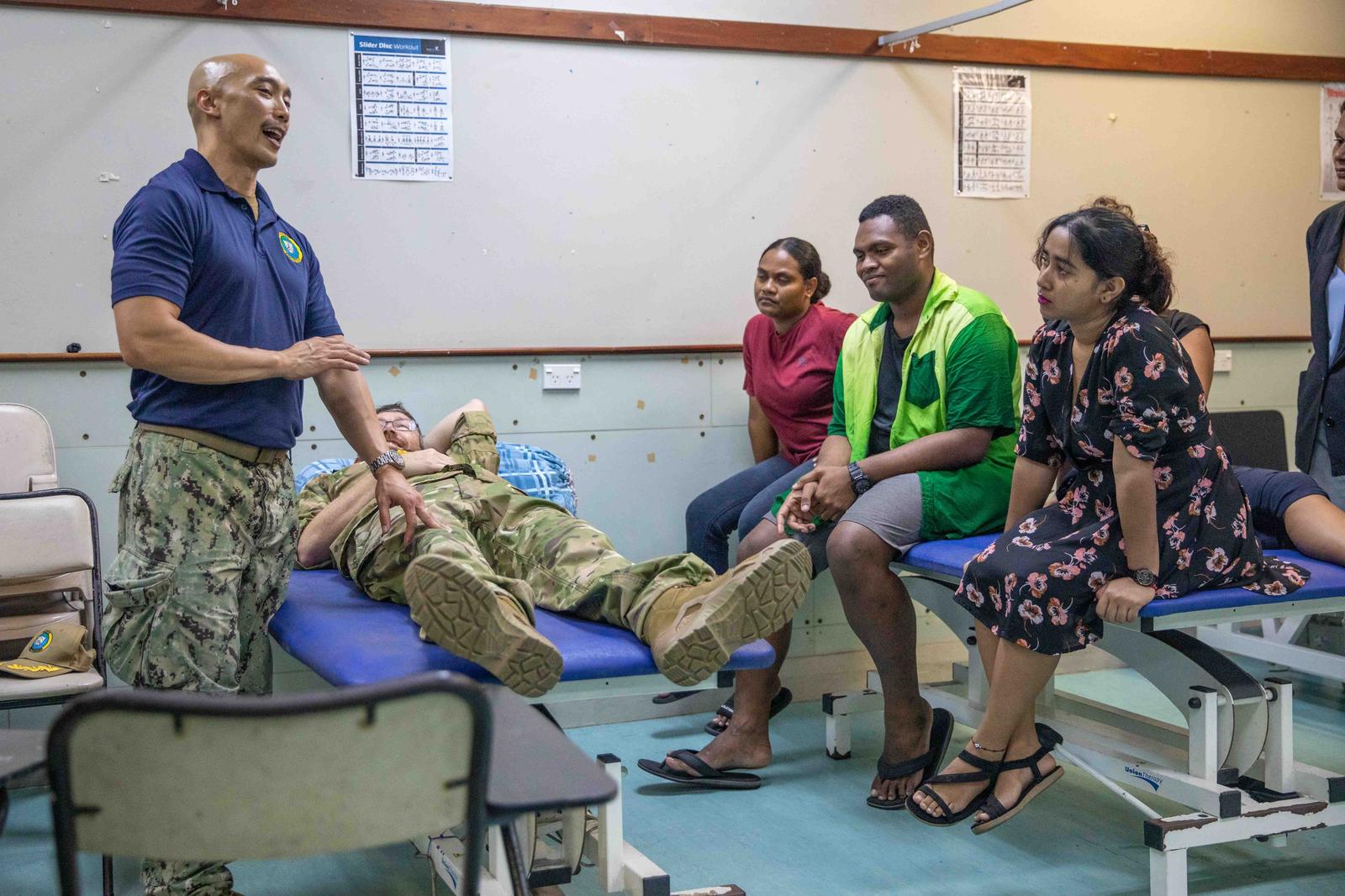
Lead photo. — U.S. Navy photo by Petty Officer 2nd Class Megan Alexander (Public domain). Source: fiji-civil-resistance-bainimarama-coup-2006.jpg

Within 24 hours of the coup the church coalition and the Great Council of Chiefs had issued condemnations [source: wikipedia] . On 7 December 2006, the Great Council called the coup illegal; 300 villagers blocked the entrance to Tavualevu Village in response to a rumour that the military was coming to arrest the chairman of the GCC; the army quickly denied the rumour [source: wikipedia] . The Methodist Church president led a delegation to visit the deposed PM under house arrest [source: wikipedia] . The Anglican Archbishop issued a statement [source: wikipedia] . Churches took out newspaper ads; one quoted Reverend Tuikilakila Waqairatu (president of the Fiji Council of Churches) saying “We are deeply convinced that the move now taken by the commander and his advisers is the manifestation of darkness and evil” [source: wikipedia] . Roman Catholic Archbishop Petero Mataca took a “more nuanced position” [source: wikipedia] . Legal challenges intensified over the following two years. On 9 April 2009 the Court of Appeal ruled the 2006 coup had not been legal, precipitating the 2009 Fijian constitutional crisis [source: wikipedia] . The coup regime nevertheless held power until Bainimarama’s electoral defeat in December 2022 [source: wikipedia] .
Key people & organizations
- Commodore Frank Bainimarama — coup leader [source: wikipedia]
- PM Laisenia Qarase — deposed, filed legal challenge [source: wikipedia]
- President Ratu Josefa Iloilo — initially signed the coup decree [source: wikipedia]
- Rev. Tuikilakila Waqairatu — president, Fiji Council of Churches [source: wikipedia]
- Anglican Archbishop [source: wikipedia]
- Archbishop Petero Mataca — Roman Catholic Archbishop [source: wikipedia]
- Methodist Church of Fiji and Rotuma [source: wikipedia]
- Fiji Human Rights Commission chairwoman Shaista Shameem [source: wikipedia]
- Fiji Law Society (Vice-President Tupou Draunidalo) [source: wikipedia]
- Great Council of Chiefs [source: wikipedia]
- Commonwealth of Nations — full suspension 1 September 2009 [source: wikipedia]
Outcome
Verdict: partial.
The campaign’s primary goal — return to constitutional government — was not achieved during the coup regime (Bainimarama retained power until December 2022). However, on 9 April 2009 the Court of Appeal ruled the 2006 coup had not been legal and called for new elections [source: wikipedia] ; international sanctions (Commonwealth suspension, sport bans, NZ suspension of military ties, US $2.5m aid suspension) materially constrained the regime [source: wikipedia] .
Lessons
- Religious institutions with public pulpits can deploy moral framing of an unconstitutional regime within hours.
- Coordinated international sanctions compound domestic isolation and shorten a regime’s appeal.
- A divided opposition that includes both condemnations (“manifestation of darkness and evil”) and “nuanced” positions (Archbishop Mataca) can be durable.
Sources
Disclaimer: Included as a teaching example of campaign craft, not as endorsement.
Sources & verification
wikipedia— grounding: secondary — license: link-only (CC-BY-SA)- Built: 2026-07-04 by
T10-balance-oceania - RAW:
RAW/fiji-civil-resistance-bainimarama-coup-2006.md