
Where it took place
| Type | Place |
|---|---|
| Region | Oceania |
| Country | Fiji |
Campaign at a glance
On 19 May 2000 George Speight, supported by the Counter Revolutionary Warfare Unit (CRWU), stormed Parliament and took the elected government of PM Mahendra Chaudhry hostage [source: wikipedia] . The FTUC called a general strike, paralysing parts of the Suva CBD; the Australian and New Zealand governments imposed travel bans on the coup leaders and banned Fijian sports teams; the European Union threatened to ban Fijian sugar; unionised Australian workers refused to load Fijian cargo [source: wikipedia] . On 1 March 2001 the Fiji Court of Appeal declared the interim regime illegal in Republic of Fiji Islands v Prasad, restoring the 1997 constitution [source: wikipedia] . The campaign’s demands — restoration of the elected Chaudhry government — were achieved within nine months of the coup, although Chaudhry’s leadership was not directly restored [source: wikipedia] . Speight pleaded guilty to treason in February 2002 and received a death sentence that was commuted to life imprisonment [source: wikipedia] .
Tactics used
- boycotts and strikes
- mass-meeting
- petitions and e campaigning
- civil-resistance
Background
The May 2000 coup followed the 1999 election in which Mahendra Chaudhry’s multiracial People’s Coalition won 54 of 71 seats [source: wikipedia] . Chaudhry became Fiji’s first Indo-Fijian Prime Minister; his government’s moves to renew agricultural leases angered hardline i-Taukei nationalists [source: wikipedia] . In September 1999 the Great Council of Chiefs rejected the lease-compensation programme and protest marches began [source: wikipedia] . On 19 May 2000, the first anniversary of Chaudhry’s election, Speight’s group seized Parliament and held the government hostage [source: wikipedia] .
What happened
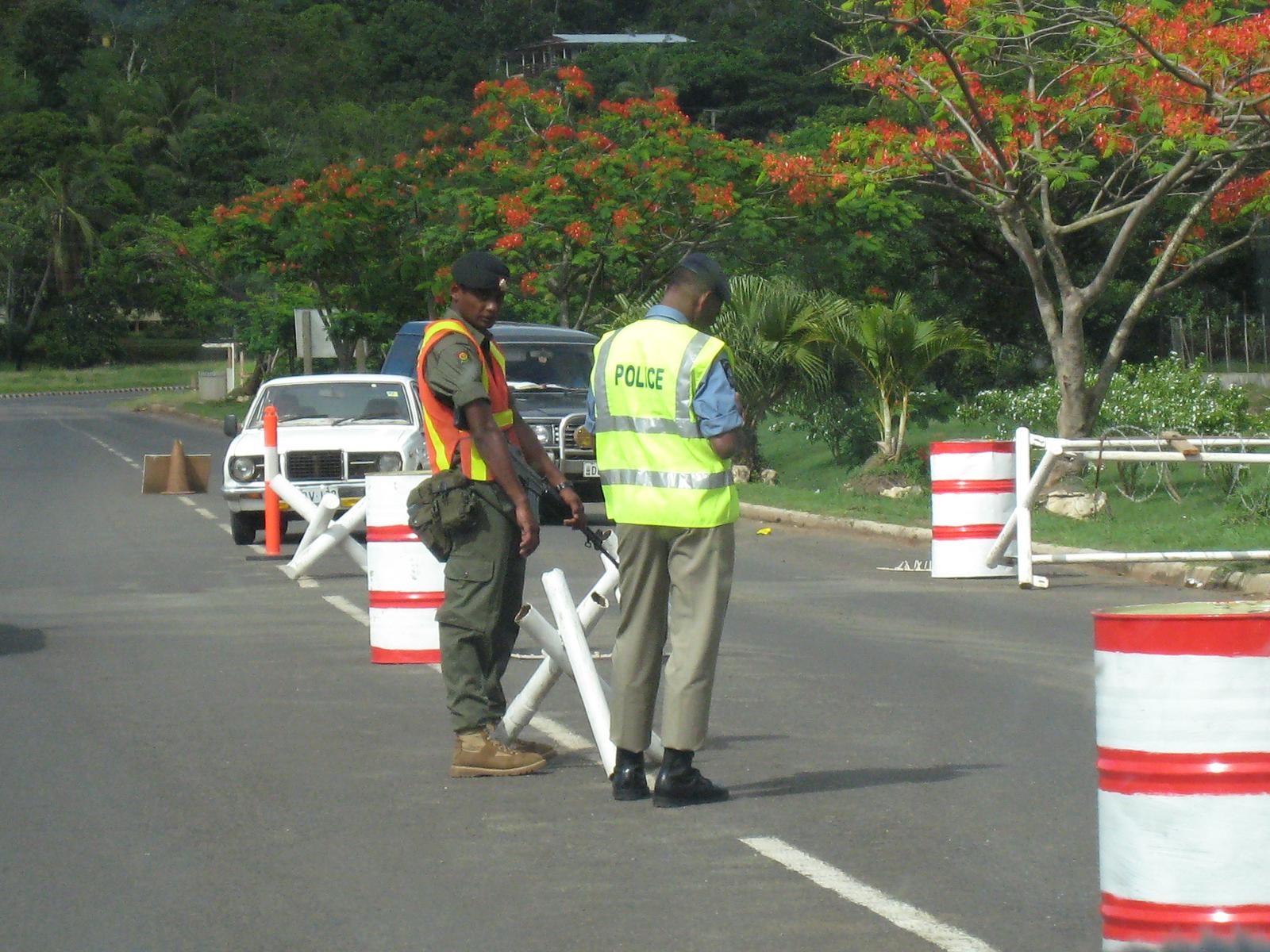
Lead photo. — catlin.wolfard (CC BY-SA 3.0). Source: fiji-ftuc-campaign-speight-coup-2000.jpg

Speight purported to revoke the 1997 constitution, appointing himself interim president and Timoci Silatolu interim prime minister [source: wikipedia] . Chaudhry was beaten after refusing to resign; 10 hostages were released on 20 May [source: wikipedia] . The FTUC called an immediate general strike; Suva’s central business district was partly paralysed; mobs looted Indo-Fijian-owned shops [source: wikipedia] . President Ratu Sir Kamisese Mara declared a state of emergency [source: wikipedia] . Negotiations stalled; on 28 May a mob attacked Fiji TV, killing a police officer [source: wikipedia] . Commodore Frank Bainimarama declared martial law and revoked the 1997 constitution [source: wikipedia] . The international response escalated: on 7 June 2000 the Commonwealth suspended Fiji; on 14 June 2000 the New Zealand government imposed a travel ban on Speight and 84 associates, plus Fijian sports teams; Australia applied a sporting ban; unionised Australian workers refused to load Fijian cargo; the EU threatened to ban Fijian sugar [source: wikipedia] . Domestically the FTUC, Fiji Law Society and civil society pursued legal challenges. On 15 November 2000 the High Court declared the interim government illegal [source: wikipedia] . On 1 March 2001 the Court of Appeal of Fiji confirmed this in Republic of Fiji Islands v Prasad [source: wikipedia] . Fiji’s economy had contracted 8.2% and tourism had dropped 30% in the intervening months [source: wikipedia] . Speight pleaded guilty to treason on 18 February 2002 and was sentenced to death, commuted to life imprisonment the same day [source: wikipedia] .
Key people & organizations
- George Speight — coup leader [source: wikipedia]
- Mahendra Chaudhry — deposed PM [source: wikipedia]
- Commodore Frank Bainimarama — Commander RFMF [source: wikipedia]
- Ratu Sir Kamisese Mara — President; resigned 29 May 2000 [source: wikipedia]
- Josefa Iloilo — named President July 2000 [source: wikipedia]
- Fiji Trades Union Congress (FTUC) [source: wikipedia]
- Counter Revolutionary Warfare Unit (CRWU) [source: wikipedia]
- Fiji Law Society [source: wikipedia]
- Australian Council of Trade Unions (ACTU) [source: wikipedia]
- New Zealand and Australian governments [source: wikipedia]
- European Union [source: wikipedia]
- Commonwealth of Nations [source: wikipedia]
Outcome
Verdict: won.
The Court of Appeal’s 1 March 2001 ruling declared the interim regime illegal and restored the 1997 constitution; new elections were held in August-September 2001, won by Laisenia Qarase [source: wikipedia] . Speight pleaded guilty to treason and was sentenced to life imprisonment [source: wikipedia] . The campaign paid an economic price — tourism down 30%, GDP contracted 8.2% [source: wikipedia] .
Lessons
- Coalition legal strategy (FTUC + Fiji Law Society + deposed government) can constrain a military regime faster than street action alone.
- International labour-movement solidarity — port bans, sugar-import threats, sports sanctions — compounds domestic isolation and shortens regime duration.
- A regime that ignores courts and overturns constitutions forfeits legitimacy rapidly.
- Sustained street mobilisation matters even after courts rule: the FTUC’s general strike on 19 May and subsequent protest vigils gave the legal campaign political cover.
Sources
Disclaimer: Included as a teaching example of campaign craft, not as endorsement.
Sources & verification
wikipedia— grounding: secondary — license: link-only (CC-BY-SA)- Built: 2026-07-04 by
T10-balance-oceania - RAW:
RAW/fiji-ftuc-campaign-speight-coup-2000.md