
Where it took place
| Type | Place |
|---|---|
| Region | Europe |
| Country | France |
Campaign at a glance
From 24 November to 15 December 1995, French public-sector unions (CGT, FO) led a coordinated, open-ended strike against Prime Minister Alain Juppé’s austerity plan, paralysing rail, subway, bus, ferry, postal, telephone and hospital services. [source: nv-database] Sustained economic disruption and 62 percent public support forced the government to withdraw the pension overhaul and delay the railway restructuring; the rest of the Juppé Plan was preserved. [source: nv-database]
Tactics used
Background
Jacques Chirac won the May 1995 presidential election 53 to 47 against Lionel Jospin and inherited an economy with 12.3 percent unemployment and a $64 billion deficit. [source: nv-database] In his first fiscal address, Prime Minister Juppé announced 1996 public-sector pay freezes, postponement of promised tax cuts, a 0.5 percent income-tax increase for all but the poorest, longer contribution periods for public-sector pensions, and the closure of unprofitable rail routes. [source: nv-database] Almost a quarter of French workers were public-sector employees and public wages accounted for about 40 percent of government spending, so the cuts landed directly on the CGT and FO federations’ base. [source: nv-database]
What happened
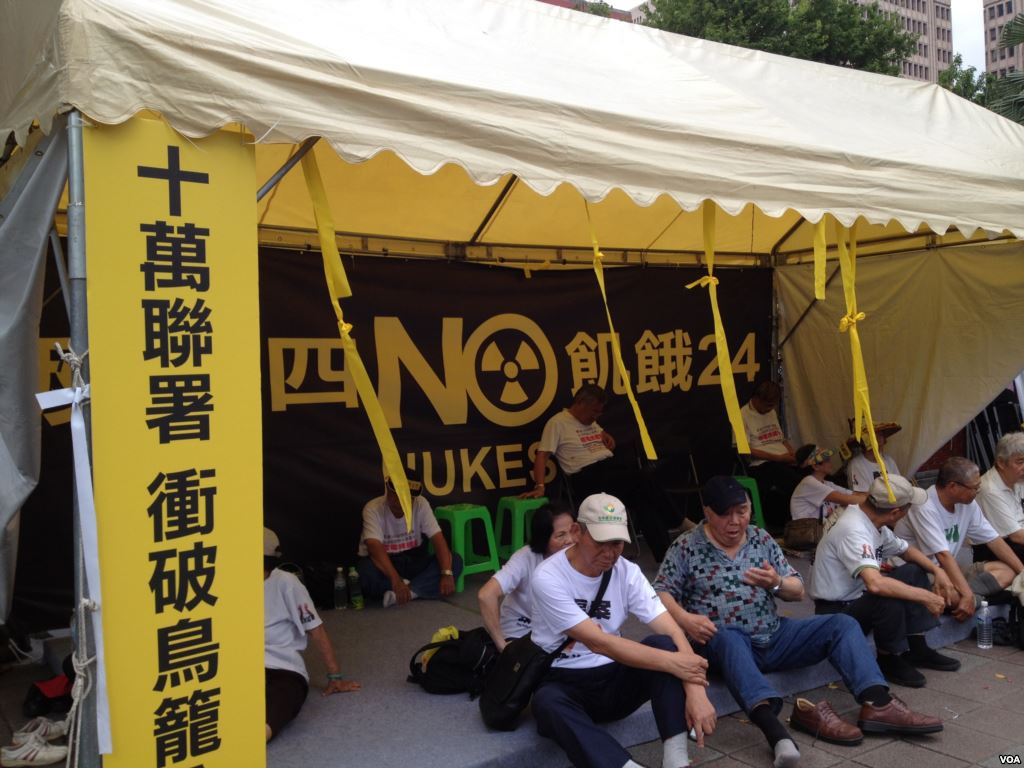
Lead photo. — 美國之音 楊晨 (Public domain). Source: france-1995-strikes.jpg

Unions warmed up with a one-day strike on 10 October 1995 that drew roughly 57 percent of civil servants and a march of about 50,000 in the Bastille. [source: nv-database] After Juppé unveiled the plan’s details on 15 November, tens of thousands of transport workers struck on 14 November and demonstrations spread across about 80 cities. [source: nv-database] The CGT called an open-ended national strike beginning 24 November; the parallel FO strike started 28 November and roughly 60,000 marched nationwide. [source: nv-database] On 30 November utility workers joined the rail workers’ indefinite walkout, and on 4 December the domestic airline, telephone, tax agencies and other public services pledged solidarity. [source: nv-database] Postal, hospital, gas, teachers and airline staff joined in the second week of December; unions estimated roughly one million workers were out on 12 December. [source: nv-database] Juppé convened an emergency cabinet on 4 December and appointed a mediator. [source: nv-database] Faced with the strike’s economic damage and steady public backing, on 15 December the government withdrew the pension-overhaul plans, delayed the railway restructuring and agreed to pay striking rail workers; rail workers voted to return on 16 December. [source: nv-database]
Key people & organizations
- Jacques Chirac — President of France (May 1995–2007) [source: nv-database]
- Alain Juppé — Prime Minister, author of the Juppé Plan [source: nv-database]
- General Confederation of Labour (CGT) [source: nv-database]
- Force Ouvrière (FO) [source: nv-database]
- French Confederation of Management – General Confederation of Executives (CFE-CGC) [source: nv-database]
- Rail, subway, bus, ferry, postal, telephone, hospital and gas worker unions [source: nv-database]
Outcome
Verdict: won.
The campaign scored 2 of 6 on achieving specific demands, 1 of 1 on survival and 3 of 3 on growth for a total of 6 of 10 points. [source: nv-database] Concrete concessions — pension-overhaul withdrawal, delay of the railway restructuring, and back-pay for striking rail workers — went to the workers who could inflict the most pressure (rail and subway), while the broader Juppé Plan austerity framework remained intact. [source: nv-database]
Lessons
- Coordinated, open-ended strikes across transport, energy and other infrastructure sectors can paralyse a national economy for weeks at acceptable political cost when unions act in concert.
- Sustained public approval (62 percent in polls) is itself an asset; organisers should track approval ratings as a metric and adapt tactics to keep the disruption framed as a defence of public services rather than as inconvenience.
- In an austerity fight, the segment with the most concentrated leverage (here, rail and subway workers) tends to extract concrete concessions while broader coalition members carry the political weight of disruption without comparable gains.
- Memories of May 1968 shaped both government fear and worker ambition; campaigners should look for precedents that already shape opponents’ threat perception.
Sources
- Global Nonviolent Action Database — French public sectors strike against the Juppé Plan, 1995 —
nv-database
Disclaimer: Included as a teaching example of campaign craft, not as endorsement.
Sources & verification
nv-database— grounding: primary — license: link-only- Rewritten: 2026-06-25 via
worker_casestudies_v2.py; deepened 2026-07-10 againstRAW/french-public-sectors-strike-against-juppe-plan-1995.md.