
Where it took place
| Type | Place |
|---|---|
| Region | Africa |
| Country | Gambia |
Campaign at a glance
In 1994, the Gambian military, led in part by Yahya Jammeh, carried out a bloodless coup against Sir Dawda Jawara and his People’s Progressive Party (PPP) administration. Jammeh was an important figure in the transitional government and was elected President in 1996. He has since been reelected in 2001, 2006 and 2011. Foreign governments have given his administration mixed reviews on human rights and victim advocacy. One such time of inquiry was when his administration dismissed Nigerian-born Justice Moses B. Richards as a High Court judge in April 2010. Mr. Richards had been known to be a str. [source: nv-database]
Tactics used
- boycotts and strikes
- declarations-of-indictment-and-intention
- sit-in
- declarations-by-organizations-and-institutions
Background
After being removed as a judge the former barrister went on to become a private lawyer. The clients he represented let him interact with governmental authorities quite a bit. On 30 December, 2010, Mr. Richards was arrested and placed in the custody of the Nigerian Intelligence Agency in Banjul. He was denied bail. The next day, he was charged with sedition and giving false information to a public servant. The second accusation came from a case of his when he sent a letter to the sheriff of the High Court regarding a land dispute in Jabang. The administration was involved and the claim was that he had willfully provided false information to the government for seditious reasons. The Gambia Bar Association released a press statement condemning his arrest as unreasonable, claiming that refusing him bail was unjustifiable and legally wrong. They went on to say that his letter, far from being criminal, came as a result of acting on the behalf of his client. [source: nv-database]
What happened
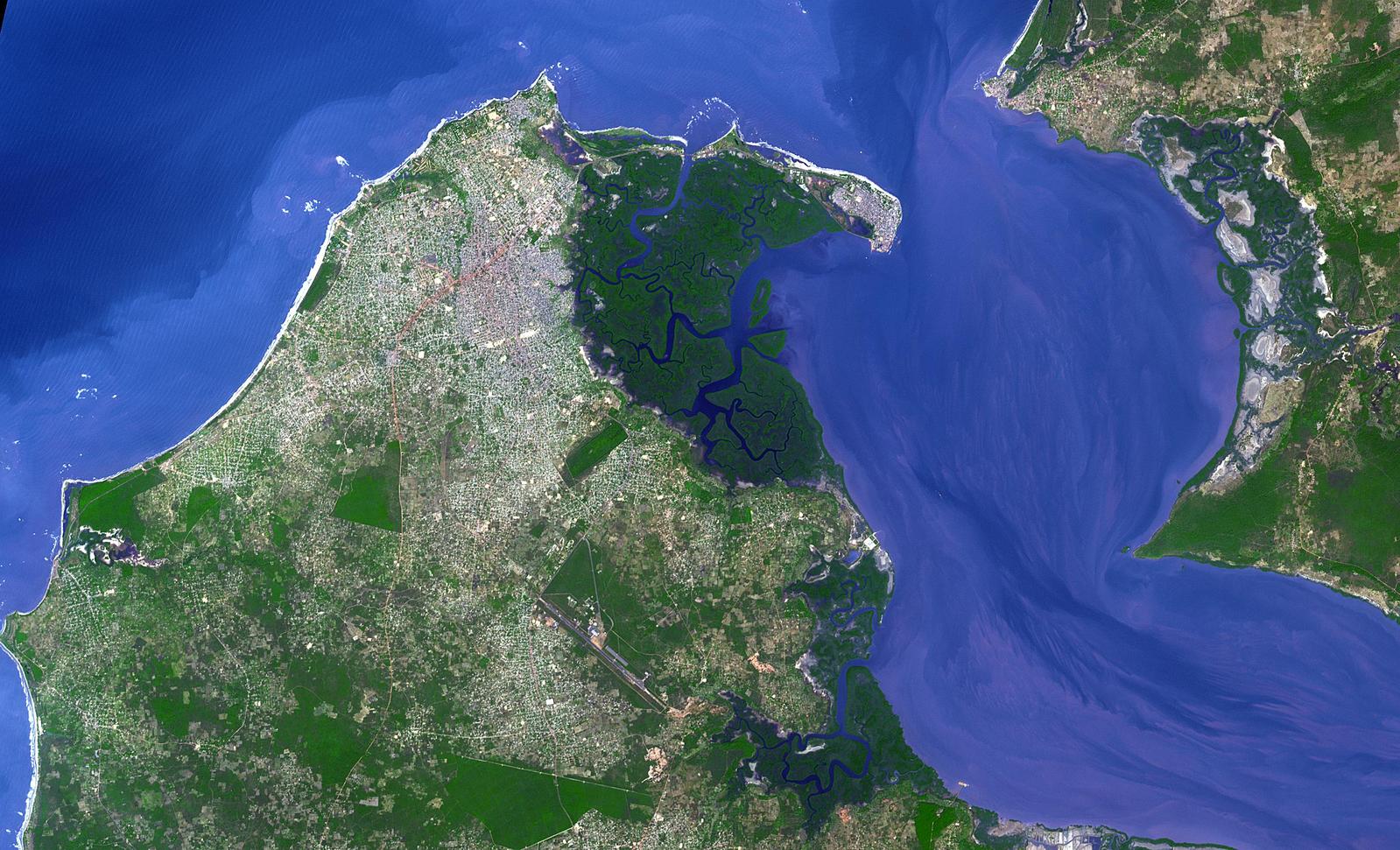
Lead photo. — NASA/METI/AIST/Japan Space Systems, and U.S./Japan ASTER Science Team (Public domain). Source: gambian-lawyers-protest-arrest-fellow-lawyer-2011.jpg

On 3 January, 2011, he was released on a bail of 500 dalasis but the charges were not dropped. On 10 January, lawyers from the Bar Association refused to attend court over the course of three days, halting the judicial process. Over twenty defense lawyers stormed the Banjul Magistrates’ Court to confront the magistrate who had denied Richards bail and demand that Richards receive just treatment from the prosecution. The magistrate capitulated and revised the opinion but the charges were not dropped. The political climate was very tense and the Bar Association backed off their support of Mr. Richards for fear of retaliation by the government. They did not intervene in May, for example, when Richards was ordered by the court prosecuting him to proceed even without a lawyer to represent him, claiming that he was a lawyer himself. On 19 September, Mr. Richards, pleading ‘not guilty’ was convicted of giving false information to a public servant and sedition, earning him a sentence of 30 months imprisonment with forced labor. The Bar immediately condemned the sentence and proceeded to hold another 3-day strike from judicial work. This was replicated a few weeks later on 3 October when lawyers refused to go to court and announced that they would stage a protest march to Mile Two Central prison where Mr. Richards was being held. The march was cancelled due to police refusing to give them a permit on grounds of public safety and because on 8 October, Mr. Richards released a statement, addressed to the President asking for forgiveness and denouncing his connection with the Bar Association, claiming he did not appreciate their protests. He was released on the 14 October, following a Presidential pardon. The Bar Association was very surprised by his statement, as many lawyers had volunteered their time to represent him in court, but many concluded that it had been made for political reasons and were dissatisfied that he had been forced to concede. There is concern that this case will be detrimental to Gambian human rights activists and lawyers alike in the future. Normal.dotm 0 0 1 538 3069 Swarthmore College 25 6 3768 12.0 /* Style Definitions */ table.MsoNormalTable {mso-style-name:“Table Normal”; mso-tstyle-rowband-size:0; mso-tstyle-colband-size:0; mso-style-noshow:yes; mso-style-parent:""; mso-padding-alt:0in 5.4pt 0in 5.4pt; mso-para-margin:0in; mso-para-margin-bo. [source: nv-database]
Key people & organizations
- President of the Bar Association Sheriff M. Tambedou [source: nv-database]
- None known [source: nv-database]
Outcome
Verdict: won.
Per the source’s scoring rubric, the campaign scored 6 out of 6 points on achieving specific demands/goals, 1 out of 1 points on survival, and 1 out of 3 points on growth — for 8 out of 10 points overall. [source: nv-database]
The lawyers’ campaign drew attention to the issue but it was arguably a letter of apology by Richards that secured his release [source: nv-database]
Lessons
- Sustained, broad-based nonviolent mobilization can win measurable concessions even against entrenched regimes.
- The lawyers’ campaign drew attention to the issue but it was arguably a letter of apology by Richards that secured his release. [source: nv-database]
- Public marches and assemblies create visibility but require shielding from state repression to remain effective.
- Economic pressure through strikes remains a core lever for labor and pro-democracy campaigns in West Africa.
Sources
- Global Nonviolent Action Database —
nv-database
Disclaimer: Included as a teaching example of campaign craft, not as endorsement.
Sources & verification
nv-database— grounding: primary — license: link-only- Built: 2026-07-04 from GNVAD content via T1 balance pipeline.