
Where it took place
| Type | Place |
|---|---|
| Region | Africa |
| Country | Gambia |
Campaign at a glance
Between 1965 and 1994, The Gambia was ruled over by Sir Dawda Jawara, who had allowed the IMF and World Bank to introduce Structural Adjustment Plans (SAPs) that sapped The Gambia of prosperity and fostered widespread discontent. There was initial celebration when in 1994 Lieutenant Yahya Jammeh took control of the government in a military coup. However, Jammeh proved himself to be a corrupt and repressive leader, and his election in 1998, two years after he seized power, is generally considered to have been rigged. [source: nv-database]
Tactics used
- marches
- letters-of-opposition-or-support
- banners-posters-and-displayed-communications
- declarations-by-organizations-and-institutions
- assemblies-of-protest-or-support
- nonviolent direct action
Background
On March 8, 2000, two years after Jammeh’s election, Ebrima Barry, a 19-year-old student in Brikama City, The Gambia, insulted his teacher Mr. Paul and was suspended. Mr. Paul called the fire department to remove Mr. Barry from the classroom, apparently afraid that Ebrima would not go without a fight. Yet once they had hold of him the firemen not only removed Ebrima from school, but took him to the station where they appear to have shaved his head, beaten him, forced him to carry heavy bags of cement, stripped him naked, poured cement on him, and finally put cement in his mouth and forced him to swallow. [source: nv-database]
What happened
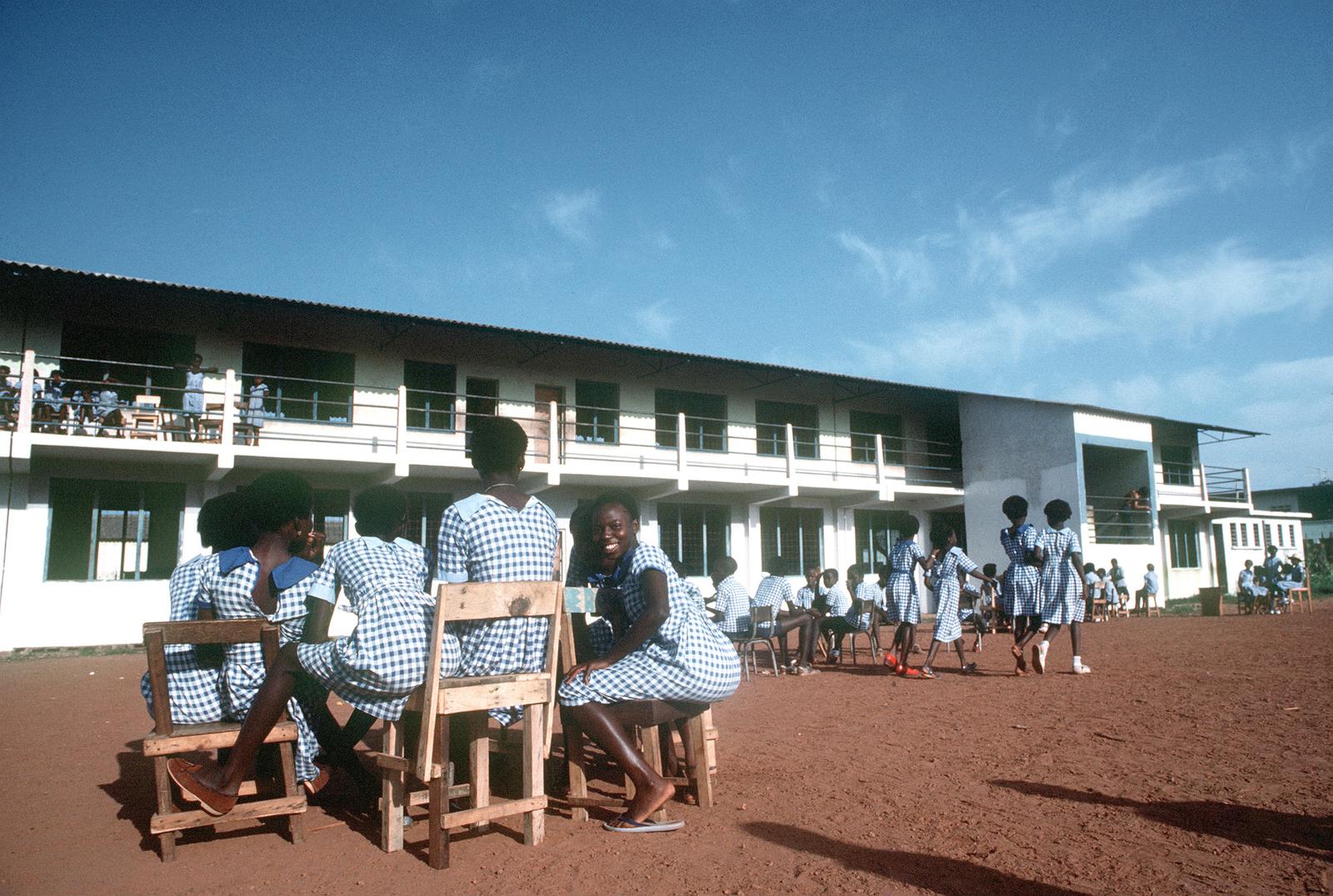
Lead photo. — PH2 JEFFREY A. SALTER (Public domain). Source: gambian-students-protest-killing-student-and-rape-13-year-old-2000.jpg

Ebrima was able to go home that night, where he told his mother what had happened. However, the next day, March 9, he died from injuries he had received at the hands of the firemen. That Friday students from Ebrima’s secondary school converged on the fire department with signs and banners, but the police rapidly dispersed them. The Gambia Student Union (GAMSU) pressed for an autopsy ascertaining the cause of Ebrima’s death. Jemmeh’s government, aside from expressing surprise that the fire department had been asked to discipline a student, had made no move to investigate the situation. When delivered, the autopsy (widely believed to be a cover-up) claimed that Ebrima died of natural causes. GAMSU members began a protest when the government released the report, and the courts eventually charged seven officers with participation in Ebrima’s death. All seven were acquitted on March 2 of the next year. In early April of 2000, while Gambians were still processing Ebrima’s murder, an armed officer raped a thirteen-year-old at a sporting event. GAMSU pressed for the girl to be allowed to identify the rapist, but the government stalled and by the point the girl –identified only as Binta – was allowed to see the men who had been on duty on the day of her rape, she was unable to recognize her assailant. Students in GAMSU were outraged by both events. They filed for a protest permit in order to express their anger and to hold those who had been responsible for the recent atrocities accountable, but the government denied their request. GAMSU decided to protest anyway, and thousands gathered on April 10 in their school uniforms at the gates of the Gambia Technical Training Institute. They intended to nonviolently march to the city center, but they were stopped by police, who ordered them to disperse. When students refused, the police opened fire, attacking with tear gas and rubber bullets. According to one source, the students scattered but regrouped, creating barricades out of burning tires and throwing stones at the police. According to the same source, as non-students joined the fray protesters attacked government buildings and set a police station on fire. The police reacted by using live ammunition, killing fourteen students, a Red Cross volunteer/radio journalist, and a three-year old that was hit by a stray bullet. Police prevented Gambians from entering the local . [source: nv-database]
Key people & organizations
- GAMSU members [source: nv-database]
- especially Omar Joof and Alieu Darboe [source: nv-database]
- Legal groups [source: nv-database]
- Amnesty International-Gambia [source: nv-database]
Outcome
Verdict: lost.
Per the source’s scoring rubric, the campaign scored 0 out of 6 points on achieving specific demands/goals, 0.5 out of 1 points on survival, and 2 out of 3 points on growth — for 2.5 out of 10 points overall. [source: nv-database]
Lessons
- A short, fragmented campaign can fail its primary aims even when the organization survives; sustained pressure is needed to shift entrenched opponents.
- Public marches and assemblies create visibility but require shielding from state repression to remain effective.
- Transnational solidarity (regional ECOWAS, AU, UN pressure) amplifies local campaigns against entrenched regimes.
Sources
- Global Nonviolent Action Database —
nv-database
Disclaimer: Included as a teaching example of campaign craft, not as endorsement.
Sources & verification
nv-database— grounding: primary — license: link-only- Built: 2026-07-04 from GNVAD content via T1 balance pipeline.