
Where it took place
| Type | Place |
|---|---|
| Region | Latin America |
| Country | Guatemala |
Campaign at a glance
In June-July 1944, a coalition of students, teachers, lawyers, women religious, and railway workers forced Guatemalan dictator Jorge Ubico to resign on July 1, 1944, ending thirteen years of brutal one-man rule. [source: nv-database] The campaign’s pivotal instrument was the Memorial de los 311 — a petition from 311 prominent citizens invoking Ubico’s own promise to resign if 300 citizens asked — backed by a six-day general strike (“Brazos Caídos”) and street mobilizations that shut down Guatemala City. The campaign scored full marks on the source’s rubric. [source: nv-database]
Tactics used
- general-strike
- student-strike
- marches
- petitions
- declarations-by-organizations-and-institutions
- political-mourning
Background
Beginning in 1931, Jorge Ubico ruled Guatemala with an iron fist through a vicious secret police; he admired Hitler’s tactics. [source: nv-database] By the summer of 1944 the similarly brutal Maximiliano Hernández Martínez had just been overthrown in El Salvador in a similar campaign — a development that the source notes served as a “template” for Guatemala’s movement. [source: nv-database]
What happened
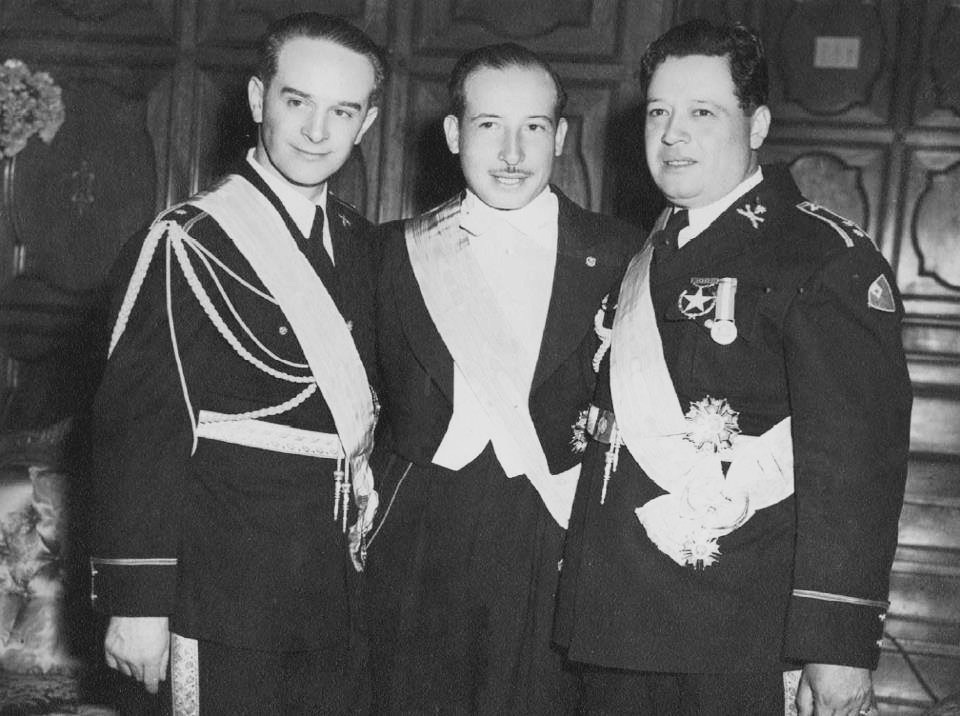
Lead photo. — Unknown authorUnknown author (Public domain). Source: guatemalans-overthrow-dictator-1944.jpg

The campaign opened with small petitions. In May 1944, forty-five lawyers petitioned the government for the removal of an arbitrary judge who tried political opponents; Ubico asked for specific charges. A day before an annual teacher-and-schoolchildren parade in Ubico’s honor, two hundred teachers petitioned for a raise; the leaders were arrested and charged with sedition, and the rest of the teachers boycotted the parade and were fired. [source: nv-database]
On June 7, sixteen students of San Carlos University petitioned for a faculty change. Ubico agreed, and the students escalated their demands. On June 20, opposition groups declared the creation of the Social Democratic Party in a manifesto supporting opposition parties, social justice, hemispheric solidarity, and the lifting of terror. Two days later the students wrote a proposition for sweeping university reform and threatened Ubico with a student strike if demands were not met within 24 hours. Ubico suspended the constitutional articles guaranteeing individual rights, including public assembly. [source: nv-database]
On June 23, both schoolteachers and university students struck. Ubico had once declared that if three hundred Guatemalan citizens asked him to resign, he would. Therefore, on June 24, a petition (the Memorial de los 311) was presented demanding the return of constitutional liberties and explaining the reasons for the civil unrest; 311 prominent citizens of the capital signed. [source: nv-database] The document was not printed in El Imparcial until July 7, when the liberties were returned. At noon on the 24th, students marched with their arms behind their backs in a peaceful demonstration past the US Embassy. That evening, a peaceful assembly called for Ubico’s resignation and organizers distributed leaflets. That night police beat, shot, and arrested hundreds during a neighborhood religious and social celebration. [source: nv-database]
By the morning of June 25, soldiers, cavalry, tanks, and machine guns were deployed in the streets of Guatemala City. The Memorial signatories Federico Carbonel and Jorge A. Serrano were summoned to the National Palace. Women dressed in mourning clothes congregated and prayed at the Church of San Francisco; when they formed a silent march, the cavalry fired toward the crowd, killing schoolteacher María Chincilla Recinos, who became the movement’s first martyr. [source: nv-database]
By June 26, all of Guatemala City joined the struggle. Citizens responded to Recinos’s killing by shutting down the economy — the general strike of June 26-30, called “Brazos Caídos” (Fallen Arms), took control of the commercial, industrial, and service sectors. Roughly 50,000 campaigners and supporters congregated around the National Palace on June 26, urging Ubico to resign. [source: nv-database] Ubico’s decree placing transportation and communication workers under military law did not break the strike. The opposition issued Ubico a unanimous letter demanding his resignation and the return of constitutional liberties.
Only the US ambassador and the army remained loyal. Impotent to restore normalcy, Ubico resigned on July 1, 1944. He handed the government over to a military triumvirate headed by Federico Ponce. In early October 1944, when it became clear Ponce would not allow free elections, students and teachers handed out leaflets calling for a political strike; on October 18 students and workers helped young military officers seize control of Guatemala City. In early 1945, a new constitution was adopted and free elections were held; Dr. Juan José Arévalo, a liberal democrat, was named president. [source: nv-database]
Key people & organizations
- Jorge Ubico — the deposed dictator
- Federico Carbonel and Jorge A. Serrano — the Memorial de los 311 signatories treated as the movement’s leaders
- Sixteen San Carlos University students — initiated the university petition
- The 311 prominent signatories of the Memorial de los 311
- María Chincilla Recinos — the schoolteacher whose death became the campaign’s first martyr
- The Social Democratic Party — formed in the opposition manifesto of June 20
- The military triumvirate headed by Federico Ponce — the transitional government
- Dr. Juan José Arévalo — elected president after the 1945 constitution
Outcome
Verdict: won.
Ubico resigned on July 1, 1944. [source: nv-database] The October 1944 popular strike then forced out the Ponce triumvirate and led to a new constitution and the first free election; the elected government of Juan José Arévalo (1945-1951) instituted major social reforms and allowed dissent for the first time in decades. The source scores the campaign at full marks on demand achievement, survival, and growth. [source: nv-database]
Lessons
- A regime’s own public statement of principle (“if three hundred ask, I will resign”) can be turned into a tactical instrument when the campaign can credibly deliver the count.
- A mass martyrdom — María Chincilla Recinos’s death during a silent religious march — can convert scattered resistance into a citywide general strike within twenty-four hours.
- A first victory over the dictator is incomplete if a transitional regime inherits the dictator’s instruments; follow-up action against the triumvirate may be necessary to complete the democratic transition.
Sources
Disclaimer: Included as a teaching example of campaign craft, not as endorsement.
Sources & verification
nv-database— grounding: primary — license: link-only / all-rights-reserved (ND-style; content paraphrased, not quoted)- Verified: 2026-07-04 by human