
Where it took place
| Type | Place |
|---|---|
| Region | Latin America |
| Country | Haiti |
Campaign at a glance
In January 1946, a five-day nonviolent campaign led by Marxist student journalists and joined by teachers, transport workers, civil servants, and laborers forced Haitian President Elie Lescot to resign, ending a US-backed dictatorship and opening the path to free elections. [source: nv-database] The campaign grew from a single student strike into a nationwide general strike that shut down Port-au-Prince, paralyzed US-owned businesses, and compelled a military junta to place Lescot under house arrest. The campaign scored 10 out of 10 on the source’s rubric — full success on demands, survival, and growth. [source: nv-database]
Tactics used
- general-strike
- marches
- declarations-by-organizations-and-institutions
- nonviolent direct action
Background
Haitian President Elie Lescot had been granted near-dictatorial powers by his congress and was openly backed by the United States. He was part of the mulatto ruling class at a moment when black political radicalism was rising, and he cooperated closely with the Dominican dictator Rafael Trujillo. [source: nv-database] Independent press had already been suppressed: the student journal Zinglins was shut down in May 1945 after it criticized the regime, and the editors of another student paper, La Ruche, were arrested and forbidden to publish on January 3, 1946, after declaring 1946 the year of “victory of democracy over fascist oppression.” [source: nv-database]
What happened
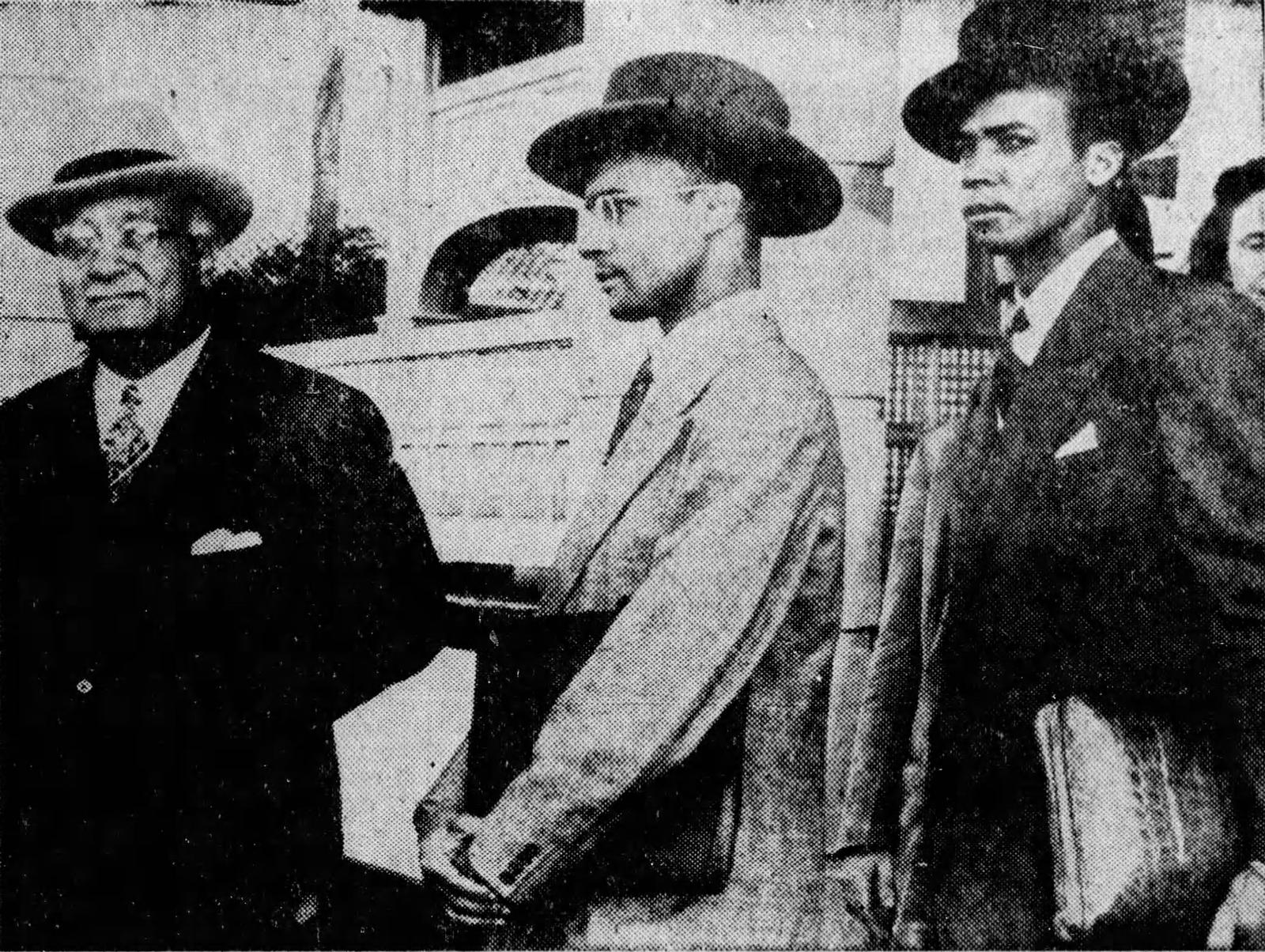
Lead photo. — Unknown authorUnknown author (Public domain). Source: haitians-overthrow-dictator-1946.jpg

On January 4, 1946, medical student Jacques Stephen Alexis met with the La Ruche editors — including Gerald Bloncourt — and other Marxist student leaders to plan a campaign against the regime. They called a student strike to begin January 7 and formed a new political party, the Party Démocratique Populaire de la Jeunesse Haïtienne (PDPJH), demanding immediate elections, the release of political prisoners, and freedom of the press. [source: nv-database]
On Sunday January 6, a popular lecture on “freedom” was followed by a small march in which two leaders were arrested and held overnight. The next morning the student strike opened as planned: students walked out of their classes, called on girls from a nearby school to form a human shield against police beatings, and marched to the US embassy. Soldiers and police beat demonstrators and arrested several leaders. [source: nv-database]
By January 8 the strike had broadened: shopkeepers closed their stores, civil servants stopped work, and teachers, transport workers, and laborers joined. Demonstrators banged pots in the street and roughly four thousand people marched from Port-au-Prince toward the presidential palace. [source: nv-database]
On January 10, Lescot declared martial law and told the nation he would use any measures to restore order. When a feminist organization marched against the dictatorship, soldiers opened fire, killing two demonstrators and triggering street riots. That evening, every member of Lescot’s cabinet resigned rather than serve his regime, leaving him unable to reconstitute a government. [source: nv-database]
On January 11, negotiators for the strike met Lescot and demanded his immediate resignation; he offered to step down in May. That afternoon three military leaders took power, placed Lescot under house arrest, and announced elections as soon as possible. [source: nv-database] Elections for congress and the presidency were held in May 1946; the black moderate politician Dumarsais Estimé — loosely aligned with the PDPJH — was elected president and formed a predominantly black cabinet. [source: nv-database]
Key people & organizations
- Jacques Stephen Alexis — medical student, co-organizer of the campaign
- Gerald Bloncourt — editor of La Ruche, co-organizer
- René Despetre and Theodore Baker — Marxist student leaders
- Party Démocratique Populaire de la Jeunesse Haïtienne (PDPJH) — student political party formed for the campaign
- Teachers, transport workers, civil servants, and laborers who joined the general strike
- President Elie Lescot — the deposed dictator
- Lt. Col. Franck Lavaud and other military officers who assumed power
- Dumarsais Estimé — the black moderate elected president in May 1946
Outcome
Verdict: won.
Lescot was forced from office in five days, political prisoners were released, free elections were held four months later, and the political balance of power shifted away from the mulatto upper class. [source: nv-database] The campaign scored 6 out of 6 on achieving specific demands/goals, 1 out of 1 on survival, and 3 out of 3 on growth, for a total of 10 out of 10. [source: nv-database] Freedom of the press was a secondary goal whose attainment after the campaign is unclear from the available sources.
Lessons
- A small, organized student group can spark a country-wide general strike in less than 48 hours if it lands squarely on a shared grievance.
- Press freedom is a powerful rallying point — even when editorial space has been suppressed, the act of censoring a new paper can mobilize broad solidarity.
- Despotic regimes are vulnerable at the moment their inner circle concludes that continuing carries personal cost; the cabinet’s resignation was decisive.
Sources
Disclaimer: Included as a teaching example of campaign craft, not as endorsement.
Sources & verification
nv-database— grounding: primary — license: link-only / all-rights-reserved (ND-style; content paraphrased, not quoted)- Verified: 2026-07-04 by human