
Where it took place
| Type | Place |
|---|---|
| Region | Latin America |
| Country | Haiti |
Campaign at a glance
From May to December 1956, a series of student-led, then economy-wide, nonviolent strikes forced Haitian President Paul Magloire to resign twice, eventually clearing the way for planned elections. [source: nv-database] The campaign was unique in combining a totally disparate set of constituencies — students, business owners, the urban poor, two feminist leagues — behind a shared demand that Magloire honor constitutional term limits. The campaign scored 9 of 10 on the source’s rubric, with full marks on the demand that Magloire leave office. [source: nv-database]
Tactics used
- general-strike
- marches
- declarations-by-organizations-and-institutions
- nonviolent direct action
Background
General Paul Magloire was elected President in 1950 with 99% of the vote in an army-monitored election and consolidated power by restricting civil liberties, jailing dissidents, and breaking union organizers. [source: nv-database] After Hurricane Hazel struck in 1954 and agricultural production collapsed (80% of GNP), soil erosion and unemployment rose sharply; in January 1955 Magloire rigged the Deputies’ election and imprisoned the popular opposition figure Daniel Fignolé, dissolving the Faculty of Medicine and closing schools across the country as “centers of subversion.” [source: nv-database]
What happened
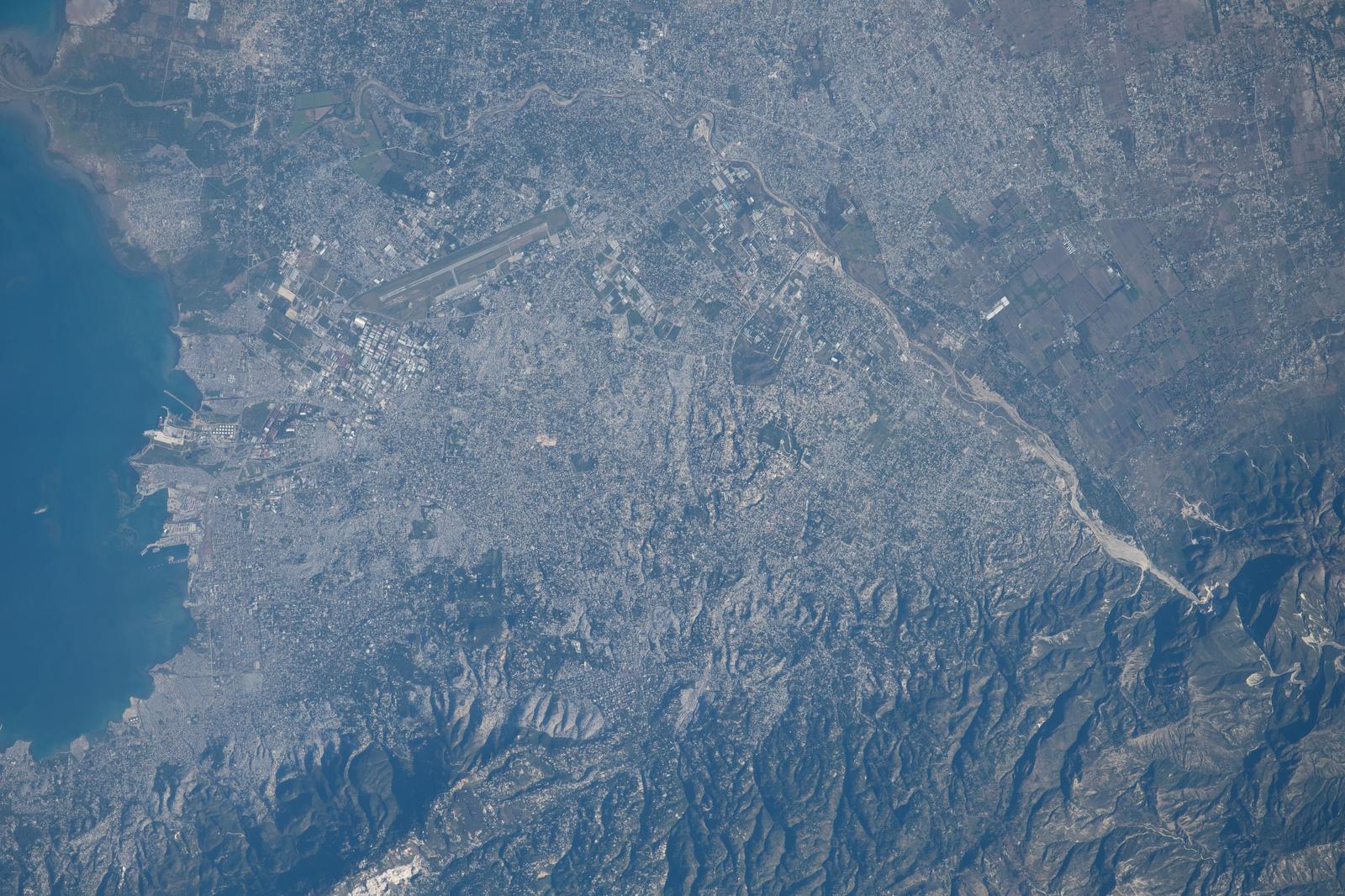
Lead photo. — NASA (Public domain). Source: haitians-strike-and-overthrow-dictator-1956.jpg

On May 17, 1956, students at the Lycée Toussaint Louverture in Port-au-Prince marched through the schoolyard shouting “Down with Magloire! He’s no good! He must go!” and burned a portrait of the president. Military police and army officers responded by entering classrooms and beating students and teachers with nightsticks and rifle butts. Within days, students in Cayes, Jacmel, and across the capital followed with their own protests, distributing anti-Magloire pamphlets and consciously echoing the 1946 student movement that had toppled a previous dictator. Magloire declared a state of siege and made mass arrests. [source: nv-database]
In September, two feminist organizations — the Women’s League and the Women’s Union — staged public protests demanding suffrage and joined the anti-Magloire movement, expanding its base. Lower-ranking officers in the army, already inclined toward candidates François Duvalier or Fignolé, did little to defend the regime. [source: nv-database]
On December 4, Magloire banned political meetings, broadcasts, and publications and arrested hundreds of opponents. Two days later he resigned and turned power to the Supreme Court, but immediately colluded with Colonel Levelt to have the Court reject the transfer so he could return as provisional president. [source: nv-database]
On December 10, business and labor groups struck in coordinated response: bus drivers refused to deliver food to the capital, shopkeepers kept their stores closed, lawyers refused cases, university and school students stayed home, and many civil servants left early. Magloire toured business leaders with a Thompson submachine gun and forced a written agreement to end the strike — but the next day the shops stayed closed anyway, and on December 12 Magloire resigned for the second and final time. A provisional government under Judge Joseph Nemours Pierre-Louis was installed and elections were scheduled for May 15, 1957. [source: nv-database]
Key people & organizations
- Daniel Fignolé — popular opposition leader and labor organizer
- François Duvalier — candidate for president in the post-Magloire succession
- Students of the Lycée Toussaint Louverture and other secondary schools in Port-au-Prince, Cayes, and Jacmel
- The Women’s League and Women’s Union — feminist organizations that broadened the protest base
- The Haitian Revolutionary Committee — underground radical group that issued anti-regime pamphlets
- Colonel Levelt — Magloire’s army collaborator in the self-coup attempt
- General Paul Magloire — the deposed president
Outcome
Verdict: won.
Magloire was forced from office twice and ultimately left the country; a provisional government took over and elections were scheduled for May 1957. [source: nv-database] The campaign scored 6 of 6 on achieving specific demands/goals, but the source documents only minimal survival — the disparate groups had little organizational infrastructure that persisted past the campaign. The resulting 1957 election was eventually won by Duvalier, whose regime would become far more repressive than Magloire’s, an outcome the source notes as a cautionary postscript. [source: nv-database]
Lessons
- Even an entrenched dictator with army and church backing can be forced out by a sustained, broad-based refusal to cooperate.
- A regime’s self-coup — Magloire’s use of the Supreme Court to engineer his own return — can be the trigger that pushes reluctant middle-class constituencies into open resistance.
- “Cautionary” wins matter: removing one dictator without a clear succession plan can open the door to a worse one.
Sources
Disclaimer: Included as a teaching example of campaign craft, not as endorsement.
Sources & verification
nv-database— grounding: primary — license: link-only / all-rights-reserved (ND-style; content paraphrased, not quoted)- Verified: 2026-07-04 by human