
Where it took place
| Type | Place |
|---|---|
| Region | Asia |
| Country | India |
Campaign at a glance
In December 2012, the gang rape and murder of a 23-year-old woman in New Delhi sparked massive protests across India. [source: nv-database]
Citizens demanded stricter laws and punishment for sexual assault, including the death penalty for rape. [source: nv-database]
The government responded in February 2013 by enacting the Criminal Law (Amendment) Ordinance, which increased penalties for sexual assault crimes. [source: nv-database]
Tactics used
- unknown
Background
On 16 December 2012, six men gang-raped and beat a 23-year-old woman on a bus in New Delhi, India. [source: nv-database]
The attack sparked public outrage due to the high rate of sex crimes in India, particularly in Delhi, and the government’s perceived failure to address sexual assault. [source: nv-database]
Protesters demanded harsher punishments, including the death penalty for rape. [source: nv-database]
What happened
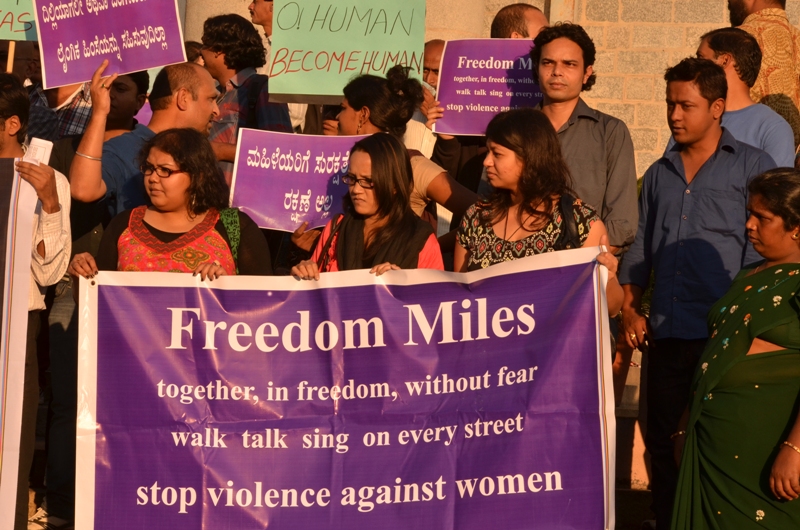
Bangalore protests following Delhi gang-rape (photo - Jim Ankan Deka) — Jim Ankan Deka (CC BY-SA 3.0). Source: indian-citizens-protest-gang-rape-gain-increased-punishment-for.jpg

Protests began on 21 December 2012 at India Gate and Raisina Hill in New Delhi, with thousands demanding action against sexual violence [source: nv-database]. Police responded with tear gas, water cannons, and baton charges, leading to some violent clashes, but most protesters remained nonviolent [source: nv-database]. On 22 December, students led protests and over 600 women demonstrated in Bangalore [source: nv-database]. The government appointed a judicial committee headed by former Chief Justice J.S. [source: nv-database] Verma to suggest legal amendments [source: nv-database]. On 29 December, the victim died, further fueling protests; left parties staged a peace march led by Brinda Karat, and Aam Aadmi Party leaders joined with black cloth over their mouths [source: nv-database]. Police continued repression, firing over 125 tear gas shells and injuring dozens [source: nv-database]. On 2 January 2013, Delhi Chief Minister Sheil Dikshit organized a Women’s Dignity March [source: nv-database]. On 3 January, students demanded an emergency parliament session to change rape laws [source: nv-database]. The Verma Committee submitted its report on 24 January, blaming government and police failures and recommending harsher punishments [source: nv-database]. On 3 February 2013, President Pranab Mukherjee enacted the Criminal Law (Amendment) Ordinance, providing the death penalty for rape [source: nv-database].
Key people & organizations
- Brinda Karat
- Arvind Kejriwal
- Manish Sisodia
- Kumar Vishwas
- Sheil Dikshit
- Human Rights Watch
- Aam Aadmi Party
- Communist Party of India
Outcome
Verdict: partial.
The campaign achieved 5 out of 6 specific goals, as the government enacted the death penalty for rape and established a helpline for women. However, rapes and protests continued after the campaign, indicating only partial success in addressing the broader issue of sexual violence. [source: nv-database]
Lessons
- Sustained public outrage and media coverage can force legislative change even in the face of state repression.
- Coalition-building across student groups, women’s organizations, and political parties amplifies pressure on authorities.
- Nonviolent discipline, despite provocations, helps maintain moral authority and public sympathy.
Sources
- Global Nonviolent Action Database —
nv-database
Disclaimer: Included as a teaching example of campaign craft, not as endorsement.
Sources & verification
nv-database— grounding: primary — license: link-only- Rewritten: 2026-06-25 via
worker_casestudies_v2.py