
Where it took place
| Type | Place |
|---|---|
| Region | Asia |
| Country | India |
Campaign at a glance
In 2011, Anna Hazare’s two public fasts in April and August — supported by mass marches, simultaneous city-wide fasts, and a one-day strike by Mumbai’s 5,000 dabbawallahs — broke parliament’s deadlock on the Jan Lokpal Bill and produced the Lokpal and Lokayuktas Bill, establishing India’s citizens’ ombudsman after 46 years of effort. [source: nv-database]
Tactics used
- hunger-strike
- mass-march
- public-rally
- refusal-of-release
Background
The Jan Lokpal Bill had been introduced ten times since 1968 without success; a 2010-11 cascade of scandals — a WikiLeaks cash-for-votes cache, a multi-billion-dollar telecom licensing scam, the Commonwealth Games and Karnataka mining scandals, and a tainted anti-corruption chief — produced widespread outrage. [source: nv-database]
What happened
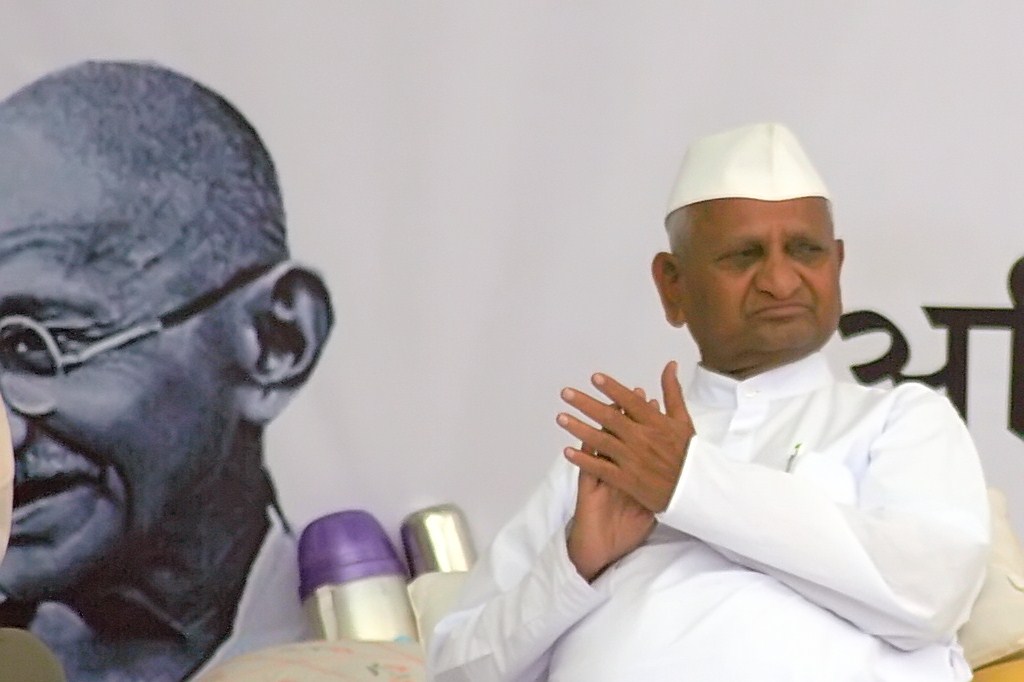
Anna Hazare on Fast unto Death (5597837277) — Ramesh Lalwani from New Delhi, India (CC BY 2.0). Source: indian-people-gain-major-anti-corruption-measure-led-anna-hazares-fast-india-2011.jpg

On 4 April 2011, veteran activist Anna Hazare held a Delhi press conference denouncing the government’s drafting committee for excluding civil society, then on 5 April began a hunger strike at Jantar Mantar. [source: nv-database] By 7 April dozens of synchronized marches hit Delhi, Mumbai, and Bangalore; within two days about 200 people were fasting with him, and celebrities Aamir Khan, Kiran Bedi, Swami Agnivesh, and Kapil Dev endorsed the cause. [source: nv-database]
On 8 April, with over 2,000 supporters at Jantar Mantar, the government conceded a 50-50 politician/activist drafting committee with co-chairs, and Hazare broke his 96-hour fast. [source: nv-database] Over the summer the joint committee deadlocked, and on 16 August Hazare announced a resumed fast. [source: nv-database] Police imposed 22 conditions including a three-day limit. [source: nv-database] Hours before the restart he was arrested, triggering protests in Delhi (1,300 arrests), Mumbai, Calcutta, and beyond; Hazare refused release and hunger-struck in prison. [source: nv-database]
The government capitulated within a day, allowing a 15-day public fast; on 19 August Hazare began at Ramlila Maidan, joined symbolically by all 5,000 Mumbai dabbawallahs on their first-ever strike. [source: nv-database] After talks stalled on 25 August, Finance Minister Pranab Mukherjee won a “sense of the House” resolution on 28 August supporting Hazare’s version of the bill, and Hazare ended his fast after twelve days. [source: nv-database]
The lower house passed a watered-down Lokpal and Lokayuktas Bill on 27 December 2011; the upper house followed on 17 December 2013, and President assent came on 1 January 2014 — establishing the ombudsman after 46 years of effort, though without several key elements of Hazare’s original vision. [source: nv-database]
Key people & organizations
- Anna Hazare (campaigner, fasted)
- “Team Anna” — Kiran Bedi, Arvind Kejriwal, and other civil-society figures
- Swami Ramdev (anti-corruption advocate)
- Aamir Khan, Kapil Dev (celebrity endorsers)
- 5,000 Mumbai dabbawallahs (first-ever strike)
- Prime Minister Manmohan Singh and Indian National Congress (opponent)
Outcome
Verdict: won. (7/10 on the GNVAD scale.)
Parliament passed the Lokpal and Lokayuktas Bill by 1 January 2014, establishing a citizens’ ombudsman after 46 years of legislative effort, though without several key elements of Hazare’s original vision. [source: nv-database]
Lessons
- A single charismatic figure who publicizes the legislative gap can rally millions, but durable pressure needs an institutionalised “Team Anna” and a specific drafting path.
- Celebrities amplify reach instantly but cannot substitute for disciplined citizen participation in the long march.
- Refusal of pre-trial release, even at personal cost (Hazare hunger-struck in prison), is a deliberately asymmetric tactic that forces the state to look either ridiculous or repressive.
- A watered-down bill is still a major structural win against entrenched corruption — partial legislation can seed future legislative rounds, and the act of passing it legitimises the ombudsman concept.
Sources
- Global Nonviolent Action Database — Indian people gain major anti-corruption measure led by Anna Hazare’s fast, India, 2011 —
nv-database
Disclaimer: Included as a teaching example of campaign craft, not as endorsement.
Sources & verification
nv-database— grounding: primary — license: link-only