
Where it took place
| Type | Place |
|---|---|
| Region | Asia |
| Country | Iran |
Campaign at a glance
In June 2009, millions of Iranians protested the disputed re-election of President Mahmoud Ahmadinejad, alleging widespread fraud. [source: nv-database]
The protests, led by opposition candidates and students, spread across multiple cities and continued for nearly two months. [source: nv-database]
Despite massive demonstrations and some government concessions, Ahmadinejad was sworn in for a second term in August 2009, and the campaign failed to achieve its primary goal. [source: nv-database]
Tactics used
- unknown
Background
On 12 June 2009, Iran held a presidential election with incumbent Mahmoud Ahmadinejad and three challengers. [source: nv-database]
Results were announced just two hours after polls closed, giving Ahmadinejad 62.63% of the vote, which many supporters of challenger Mir-Hossein Mousavi believed was rigged. [source: nv-database]
Protesters demanded the removal of Ahmadinejad and a fairly elected leader. [source: nv-database]
What happened
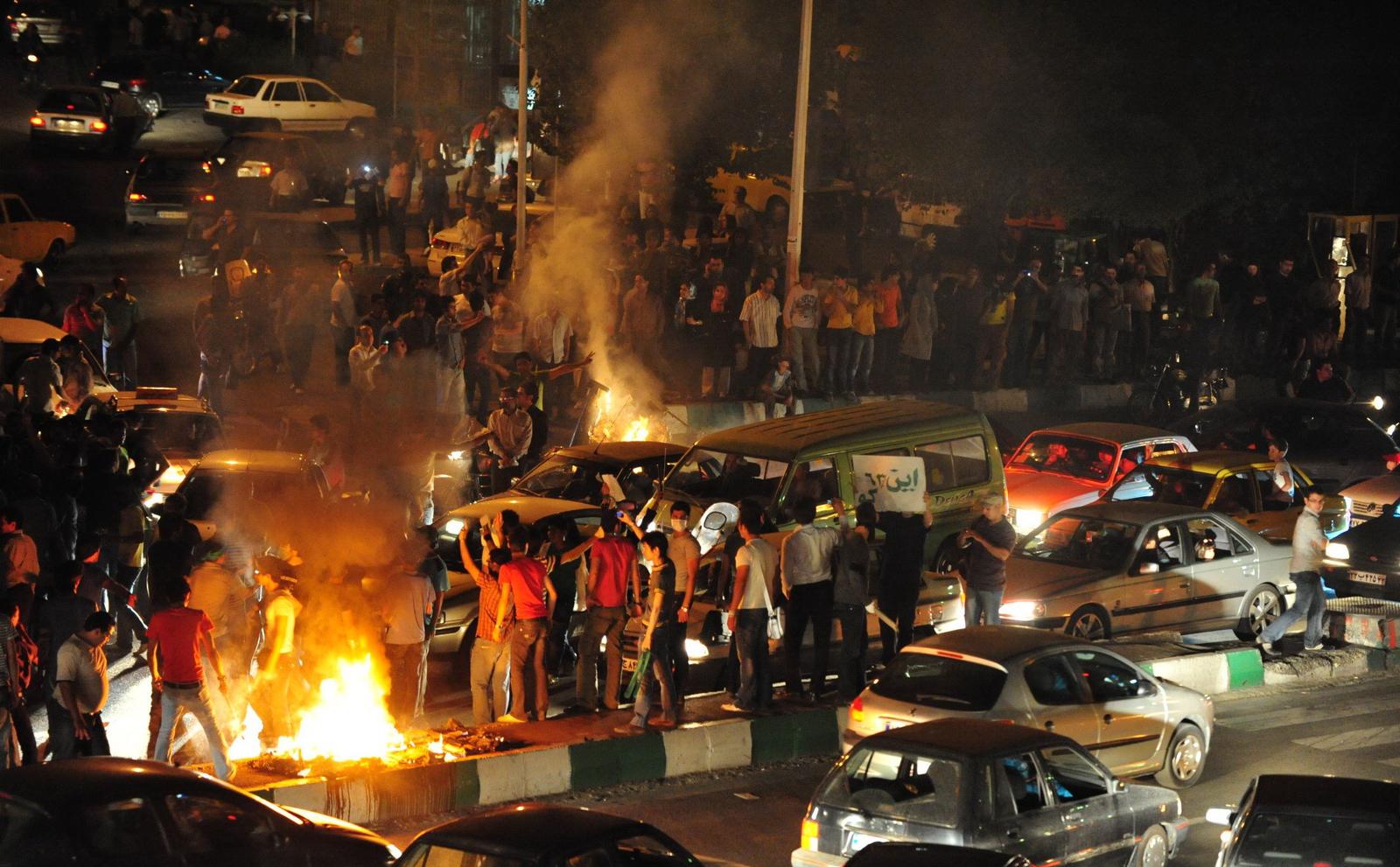
Iranians protest election results, 2009 — Wikimedia Commons contributor (CC BY 2.0). Source: iranians-protest-election-results-2009.jpg

Immediately after the election results were announced, Mousavi supporters began protesting, citing the quick announcement and suspicions from the 2005 election [source: nv-database]. Protests grew over days and spread to multiple cities, with students from Tehran University playing a key role [source: nv-database]. On 15 June, Mousavi appeared publicly despite a government ban, and up to two million people gathered at Tehran’s Freedom Square; a pro-government militia killed seven demonstrators [source: nv-database]. On 16 June, 120 professors at Tehran University resigned in protest [source: nv-database]. The next day, national soccer team players wore green wristbands in support [source: nv-database]. On 18 June, protesters held a candlelit vigil for those killed [source: nv-database]. On 19 June, Supreme Leader Ali Khamenei denounced the protests as a foreign plot, but thousands defied him the next day; security forces killed at least ten protesters, including a young woman whose death was captured on video [source: nv-database]. On 22 June, the Guardian Council confirmed Ahmadinejad as winner, and the government fired General Ali Fazli for refusing to fire on protesters [source: nv-database]. Protests slowed but continued, with drivers honking horns on 29 June [source: nv-database]. On 29 June, the Guardian Council announced a recount of 10% of ballots, reaffirming Ahmadinejad’s win, which reignited protests briefly [source: nv-database]. On 17 July, over a million attended a Friday Prayer Sermon with opposition leaders [source: nv-database]. Protesters attempted to overload Tehran’s power system by turning on appliances simultaneously, but failed [source: nv-database]. On 30 July, hundreds of thousands demonstrated to remember the dead [source: nv-database]. On 1 August, trials of protesters began, and on 5 August, Ahmadinejad was sworn in for a second term [source: nv-database].
Key people & organizations
- Mir-Hossein Mousavi
- Mohsen Rezaee
- Mehdi Karroubi
- Mahmoud Ahmadinejad
- Ali Khamenei
- General Ali Fazli
- Tehran University
- Basij
- Guardian Council
Outcome
Verdict: partial.
The campaign achieved partial success: it mobilized millions, forced some government acknowledgment of irregularities, and gained international attention, but failed to remove Ahmadinejad or force a new election. The government’s repressive violence, internal divisions, and the eventual swearing-in of Ahmadinejad limited the outcome. [source: nv-database]
Lessons
- Mass mobilization and symbolic actions can sustain a protest movement even under severe repression.
- Social media and word of mouth are effective for organizing when authorities block traditional communication.
- Elite support (from candidates, professors, athletes) can amplify a movement’s reach and legitimacy.
Sources
- Global Nonviolent Action Database —
nv-database
Disclaimer: Included as a teaching example of campaign craft, not as endorsement.
Sources & verification
nv-database— grounding: primary — license: link-only- Rewritten: 2026-06-25 via
worker_casestudies_v2.py