
Where it took place
| Type | Place |
|---|---|
| Region | Africa |
| Country | Egypt |
Campaign at a glance
In 2005, the Egyptian grassroots coalition Kefaya campaigned against President Hosni Mubarak’s constitutional referendum and his re-election for a fifth term. [source: nv-database]
The movement organized protests, boycotts, and vigils across Egypt, demanding the cancellation of emergency laws and free elections. [source: nv-database]
Despite sustained action and low voter turnout, Mubarak was re-elected with 88% of the vote, and Kefaya’s campaign did not achieve its specific demands. [source: nv-database]
Tactics used
- unknown
Background
Egyptian President Hosni Mubarak had ruled for 24 years, and in 2005 he proposed an amendment to Article 76 of the constitution allowing multi-candidate elections but requiring candidates to obtain support from 250 elected officials, effectively barring opposition. [source: nv-database]
Kefaya, a coalition of intellectuals and activists, opposed the amendment and Mubarak’s re-election, demanding the cancellation of emergency laws and free elections. [source: nv-database]
What happened
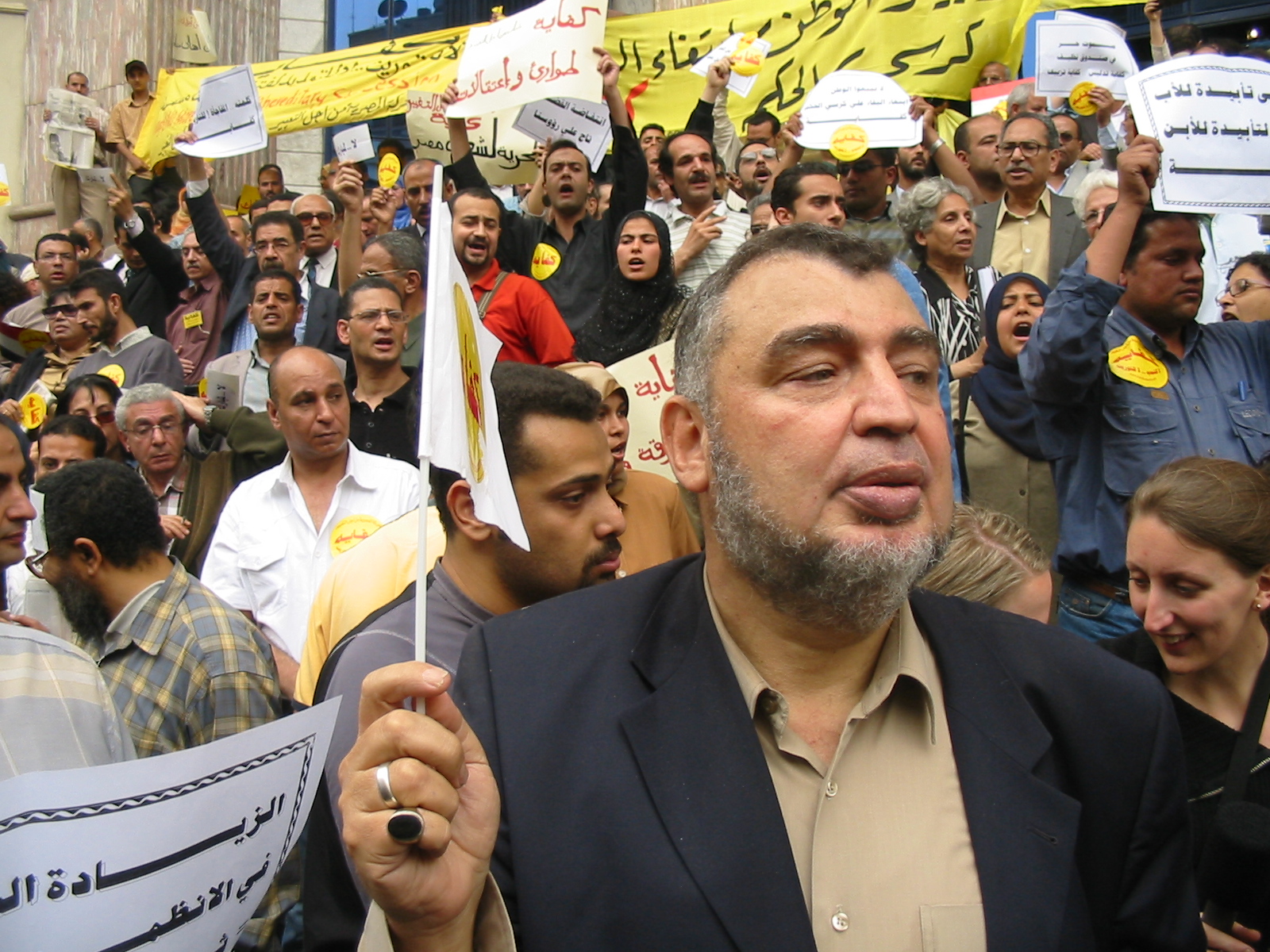
Activist and Journalist Mohamed Abdel Koddouss — Hossam el-Hamalawy حسام الحملاوي (CC BY-SA 2.0). Source: kefaya-protests-mubarak-s-referendum-and-re-election-egypt-2005.jpg

Kefaya began protesting in December 2004, with 300 members demonstrating in Cairo with taped mouths and banners against Mubarak’s rule [source: nv-database]. In February 2005, Mubarak announced the constitutional amendment and a May 25 referendum, prompting Kefaya to launch a specific campaign [source: nv-database]. On March 30, Kefaya organized demonstrations in Cairo, Alexandria, and Mansoura [source: nv-database]. On April 28, protests occurred in fourteen cities, joined by the Muslim Brotherhood, and about 75 protesters were arrested [source: nv-database]. On May 25, the day of the referendum, Kefaya held a boycott demonstration at the Saad Zaghul mausoleum and near the Press Syndicate; protesters were attacked by plainclothes police and thugs, and two women were reportedly beaten and sexually assaulted [source: nv-database]. Only 18% of Egyptians voted, according to the Egyptian Independent Committee [source: nv-database]. On June 8, 2,000 people held a candlelight vigil for victims of the crackdown [source: nv-database]. On July 30, a Kefaya-led protest was again met with violence [source: nv-database]. Kefaya then called for a boycott of the presidential election [source: nv-database]. On September 7, Mubarak was re-elected with 88% of the vote, and Kefaya held protests that day without violence [source: nv-database]. On September 27, 7,000 Egyptians marched in Cairo, and Kefaya declared the results invalid [source: nv-database]. After the election, Kefaya’s activity declined due to repression and internal conflicts [source: nv-database].
Key people & organizations
- Kefaya
- George Ishaq
- Amin Iskandar
- Hosni Mubarak
- Muslim Brotherhood
- Egyptian judges
Outcome
Verdict: lost.
Kefaya failed to stop the referendum or prevent Mubarak’s re-election, as the regime used fraud and repression to maintain power. However, the campaign raised awareness, influenced low voter turnout, and inspired later pro-democracy movements. [source: nv-database]
Lessons
- Sustained nonviolent action can raise public awareness and influence turnout even when immediate demands are not met.
- International media attention can temporarily reduce regime violence during elections.
- Coalitions across political and ideological lines can amplify a movement’s reach and legitimacy.
Sources
- Global Nonviolent Action Database —
nv-database
Disclaimer: Included as a teaching example of campaign craft, not as endorsement.
Sources & verification
nv-database— grounding: primary — license: link-only- Rewritten: 2026-06-25 via
worker_casestudies_v2.py