
Where it took place
| Type | Place |
|---|---|
| Region | North America |
| Country | United States |
Campaign at a glance
In 1912, mostly female immigrant factory workers in Lawrence, Massachusetts, struck against wage cuts and poor working conditions, demanding better pay and humane treatment. [source: nv-database]
The strike, led by the IWW and Italian Socialist Federation, drew national attention after police violence against children. [source: nv-database]
After two months, the American Woolen Company and other mills agreed to the workers’ demands, resulting in a victory. [source: nv-database]
Tactics used
- unknown
Background
Lawrence, Massachusetts, had a thriving textile mill industry where men, women, and children worked in dangerous conditions, with about a third of workers dying before age 25. [source: nv-database]
In 1912, a new Massachusetts law reduced the maximum weekly hours for women from 56 to 54, and factory owners cut pay accordingly, sparking outrage. [source: nv-database]
Workers demanded a 15% wage increase, double pay for overtime, and no discrimination against strikers, seeking both better wages (‘bread’) and humane conditions (‘roses’). [source: nv-database]
What happened
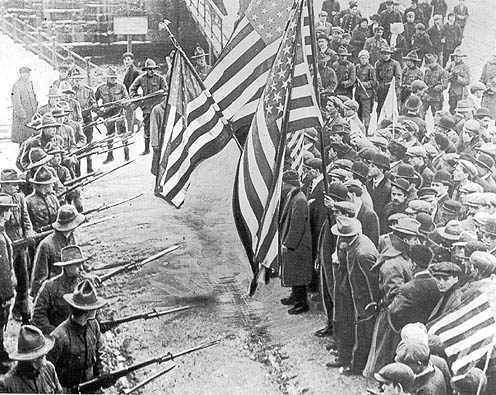
1912 Lawrence Textile Strike 1 — Wikimedia Commons contributor (Public domain). Source: lawrence-ma-factory-workers-strike-for-bread-and-roses-u-s-1912.jpg

On January 11, 1912, women at Everett Cotton Mills walked out upon learning of the wage cut, and within a week over 20,000 workers joined the strike [source: nv-database]. The IWW and Italian Socialist Federation formed a strike committee with two members from each ethnic group to coordinate actions [source: nv-database]. The city called out the militia, and workers responded with large-scale picketing, leading to hundreds of arrests [source: nv-database]. Factory owner William Wood was discredited after paying someone to plant dynamite to frame strikers, swinging public opinion in favor of the workers [source: nv-database]. Martial law was declared, banning public meetings, and two IWW leaders were framed and arrested for murder [source: nv-database]. The IWW raised national support, providing soup kitchens and sending hundreds of children to New York for safety [source: nv-database]. On February 24, police beat mothers and children at the train station trying to send children to Philadelphia, drawing national media attention and the involvement of Helen Taft [source: nv-database]. On March 12, the American Woolen Company agreed to all initial demands, and other mills soon followed, ending the strike successfully [source: nv-database].
Key people & organizations
- International Workers of the World (IWW)
- Italian Socialist Federation (ISF)
- United Textile Workers (UTW)
- William Wood
- Helen Taft
Outcome
Verdict: won.
The strikers achieved all six of their specific demands, including wage increases and overtime pay, and the campaign survived and grew, earning a total success score of 10 out of 10 points [source: nv-database]. The victory was secured through sustained nonviolent action, national solidarity, and exposure of employer misconduct.
Lessons
- Building a diverse strike committee representing all ethnic groups can unify a fragmented workforce.
- Exposing opponent misconduct (e.g., framing attempts) can swing public opinion in favor of strikers.
- National media attention and elite allies (like Helen Taft) can pressure employers to concede.
- Providing alternative social institutions (soup kitchens, child evacuation) sustains morale and participation.
Sources
- Global Nonviolent Action Database —
nv-database
Disclaimer: Included as a teaching example of campaign craft, not as endorsement.
Sources & verification
nv-database— grounding: primary — license: link-only- Rewritten: 2026-06-25 via
worker_casestudies_v2.py