
Lessons from Successful Climate Justice Campaigns in North America
Summary
This article synthesizes findings from a 2023 research project that analyzed 14 intersectional climate justice campaigns across North America over the past 20 years. [source: commons-library]
It identifies key factors that contributed to campaign success, including direct action, diverse social movement participants, community engagement, and coalition building. [source: commons-library]
The report draws on case studies, interviews, and a survey to offer a recipe for winning climate justice campaigns. [source: commons-library]
Tactics used
Tactics used
- unknown
Background
The research project was conducted in 2023 by McGill University student researchers supervised by Dr. [source: commons-library]
Jen Gobby, supporting the work of the Climate Justice Organizing Hub. [source: commons-library]
The researchers sought lessons from intersectional climate campaigns across Turtle Island (North America) over the past 20 years, using case studies, 4 interviews, and 1 survey to identify factors that contributed to success. [source: commons-library]
What happened
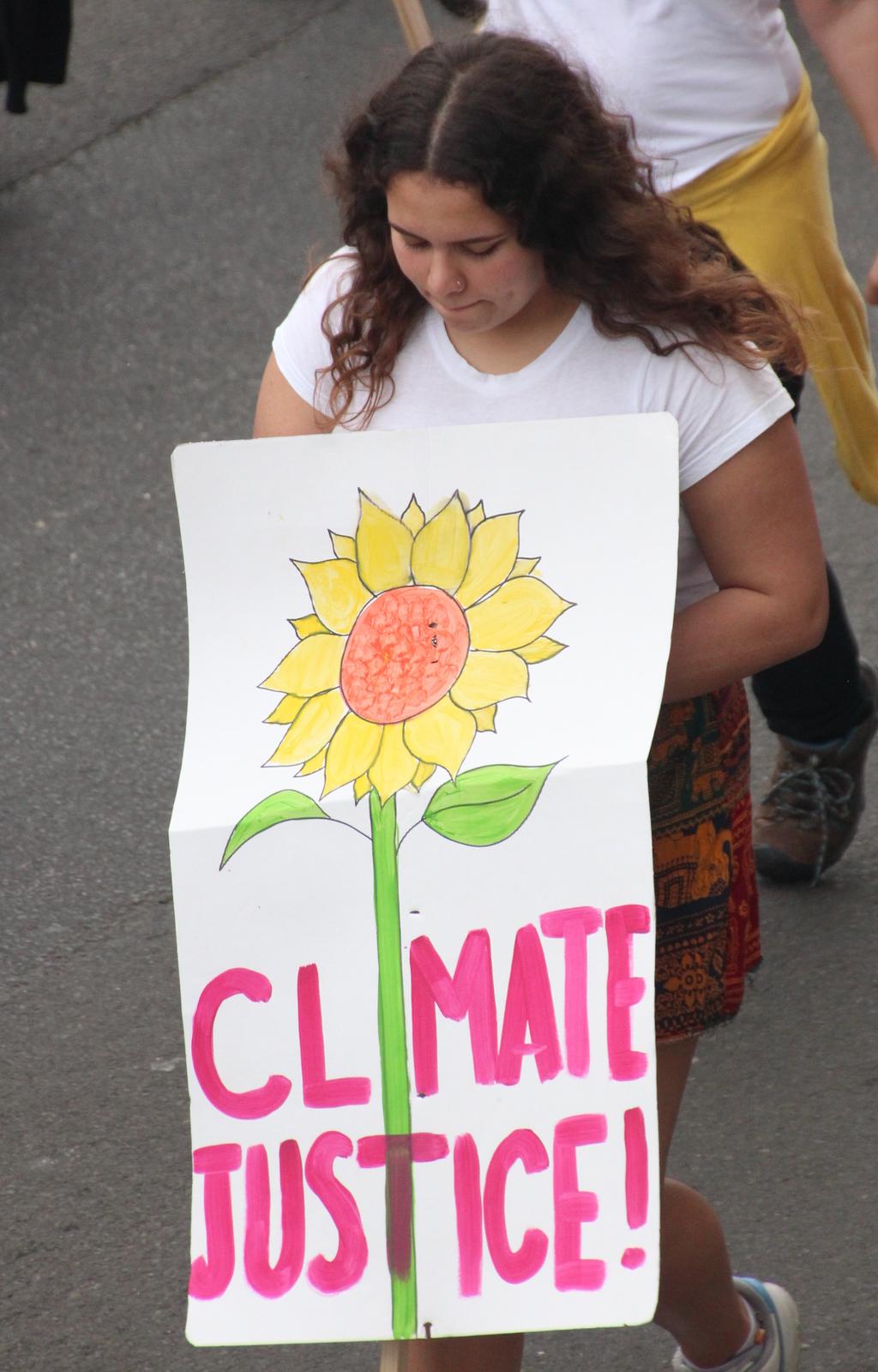
Climate Justice. -Melbourneclimatestrike IMG 5252 (48764943946) — Takver from Australia (CC BY-SA 2.0). Source: lessons-from-successful-climate-justice-campaigns-in-north-america.jpg

The researchers analyzed 14 campaigns, including Stand LA, Stop Cop City, Keystone XL Pipeline, Grassy Narrows, #RightToBreathe/PES, 13 Pueblos, Trans Mountain Expansion Pipeline, Atlantic Coast Pipeline, Public Power New York, Mi’kmaq Resistance, GNL Quebec, Standing Rock, Athabasca Tar Sands Resistance, and Nitaskinan60 [source: commons-library]. For the majority, success was defined by the cancellation of a project or practice; others defined success through recognition of Indigenous sovereignty and/or policy change [source: commons-library]. About 1 in 3 of the campaigns explored are still ongoing [source: commons-library]. The report includes a summary of the 14 campaigns and the tactics they used, as well as key factors that contributed to success and challenges [source: commons-library]. Direct actions that increase project costs and delays are cited by companies as a factor of project cancellation; for example, the Mi’kmaq resistance used blockades which led to the cancellation of a fracking project [source: commons-library]. The campaign against the GNL pipeline in Quebec had NGOs follow the leadership and guidelines of two citizen collectives [source: commons-library]. The Atlantic Coast Pipeline was legally recognized as part of the National Parks System, meaning the U.S. [source: commons-library] Forest Service did not have authority to issue construction permits, which was cited as a factor when the pipeline was canceled [source: commons-library]. Several campaigns leveraged social media, such as Philly Thrive’s #RightToBreathe campaign and Standing Rock’s #NoDAPL campaign [source: commons-library]. A press conference held by Stand LA got the attention of a senator, leading to an EPA investigation that resulted in the campaign’s success [source: commons-library].
Key people & organizations
- Global Grassroots Support Network
- Kenzie Harris
- Dr. Jen Gobby
- Climate Justice Organizing Hub
- McGill University
- Stand LA
- Stop Cop City
- Keystone XL Pipeline
- Grassy Narrows
- #RightToBreathe/PES
- 13 Pueblos
- Trans Mountain Expansion Pipeline
- Atlantic Coast Pipeline
- Public Power New York
- Mi’kmaq Resistance
- GNL Quebec
- Standing Rock
- Athabasca Tar Sands Resistance
- Nitaskinan60
- David Suzuki
- Philly Thrive
- Wet’suwet’en Nation
Outcome
Verdict: unknown.
The outcome is unknown because the article is a synthesis of lessons from multiple campaigns, some of which are still ongoing, and it does not provide a single definitive outcome for the overall research project. The report notes that for the majority of campaigns, success was defined by project cancellation or policy change, but about 1 in 3 campaigns are still ongoing. [source: commons-library]
Lessons
- Direct action that increases project costs and delays is a key factor in project cancellation.
- Letting impacted communities lead, with support from NGOs and allies, increases the chance of success.
- Coalition building with diverse groups (unions, academics, legal groups) can provide resources and amplify campaigns.
- One-to-one conversations and community engagement help shift local narratives and build support.
- Legal action and political pressure can delay projects and attract public attention, but may not always result in material gains.
- Mass communication via social media and independent media helps counter mainstream narratives and engage wider publics.
Sources
- commons-library —
[[commons-library]]
Disclaimer: Included as a teaching example of campaign craft, not as endorsement.
Sources & verification
commons-library— grounding: primary — license: link-only- Rewritten: 2026-06-25 via
worker_casestudies_v2.py