
Where it took place
| Type | Place |
|---|---|
| Region | Africa |
| Country | Western Sahara |
Campaign at a glance
From 1999 to 2004, Sahrawi activists in Western Sahara and southern Morocco launched a nonviolent campaign demanding that the Moroccan government address human rights violations and recognize Western Sahara’s right to self-determination. [source: nv-database] The campaign featured sit-ins, protests, and the formation of human rights organizations. [source: nv-database] It did not achieve its goals but inspired a larger second intifada in 2005. [source: nv-database]
Tactics used
Background
In 1975, Morocco invaded Western Sahara, a former Spanish colony, defying a UN resolution for self-determination. The Sahrawi Polisario Front fought a violent campaign for independence, but Morocco built a wall controlling most of the territory, and a 1991 ceasefire promised a referendum that Morocco blocked. Sahrawis faced repression, disappearances, and torture, leading to demands for human rights and independence.
What happened
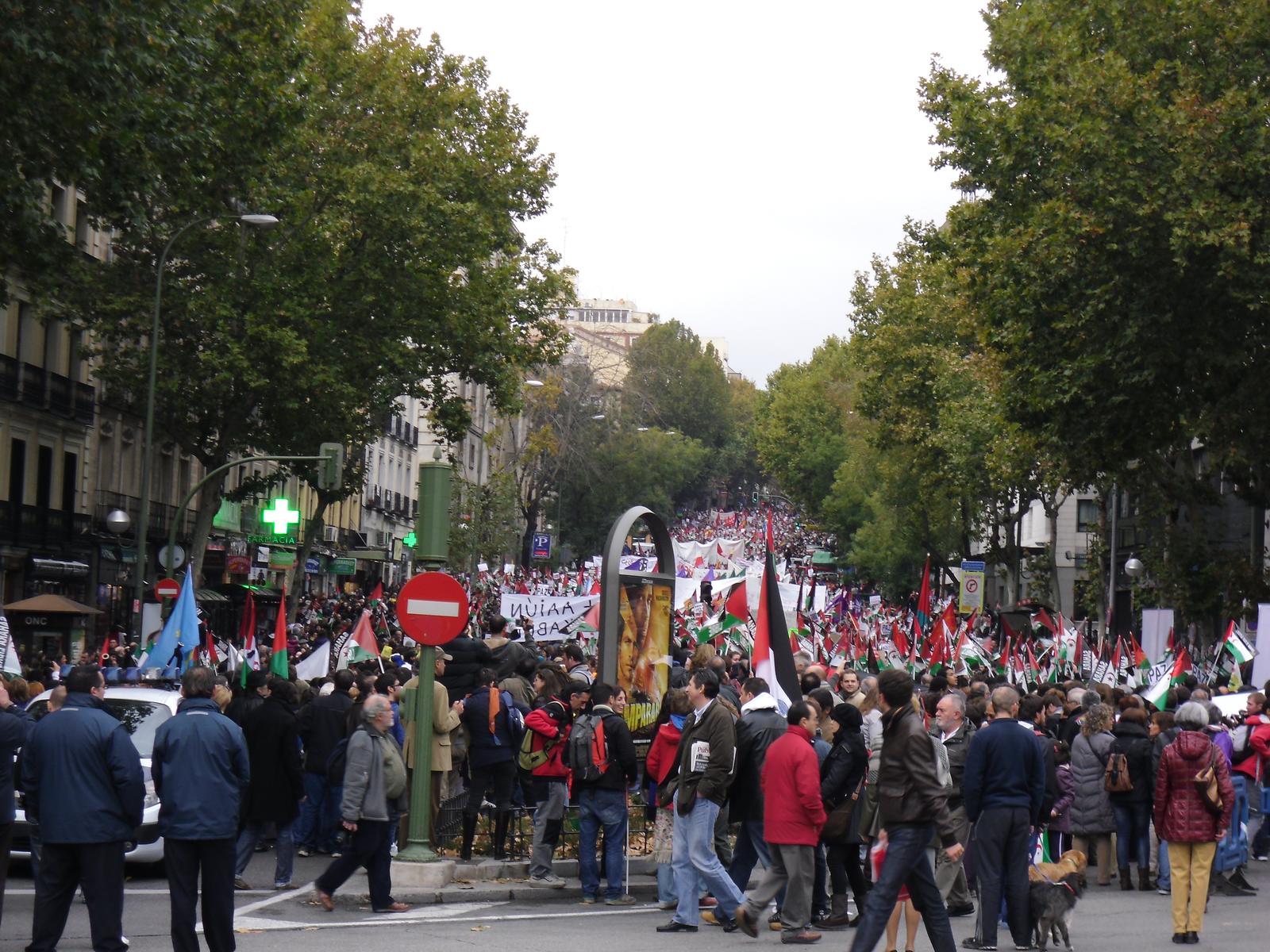
Lead photo. — Wikimedia Commons contributor (CC BY-SA 4.0). Source: sahrawis-campaign-for-human-rights-and-independence-in-the-first.jpg
The first Sahrawi intifada began in September 1999 after King Hassan II’s death created political space. [source: nv-database] Sahrawi students held a sit-in at al-Zamlah Square in al-‘Ayun, demanding scholarships and transportation subsidies, and were soon joined by political prisoners, phosphate mine workers, and unemployed graduates [source: nv-database]. The protest lasted 12 days before police beat and arrested demonstrators, with some reportedly driven into the desert [source: nv-database]. Five days later, a larger protest demanded independence and a referendum; Moroccan officials authorized thugs to ransack homes and arrested 150 people, with many more rounded up in early 2000 [source: nv-database]. In November 1999, former political prisoners formed the Truth and Justice Forum to seek redress for human rights violations, and its Sahara Branch was outlawed in 2002 [source: nv-database]. In January 2004, activist groups united under the Collective of Sahrawi Human Rights Defenders, demanding an international commission of inquiry [source: nv-database]. Protests continued through 2004, but peace negotiations stalled, leading to a second intifada in 2005 that focused more openly on independence [source: nv-database].
Key people & organizations
- Aminatou Haidar [source: nv-database]
- Ali Salem Tamek [source: nv-database]
- The Truth and Justice Forum [source: nv-database]
- the Collective of Sahrawi Human Rights Defenders [source: nv-database]
- Polisario Front [source: nv-database]
- United Nations [source: nv-database]
- Moroccan government [source: nv-database]
Outcome
Verdict: lost.
The campaign failed to achieve its demands for human rights redress and self-determination, scoring 0 out of 6 points for success, but it survived and grew, inspiring a larger second intifada in 2005 [source: nv-database].
Lessons
- Nonviolent campaigns can create political space after a repressive leader’s death.
- Coalition-building across different social groups strengthens protest movements [source: nv-database]
- Even unsuccessful campaigns can lay the groundwork for future uprisings.
Sources
- Global Nonviolent Action Database —
nv-database
Disclaimer: Included as a teaching example of campaign craft, not as endorsement.
Sources & verification
nv-database— grounding: primary — license: link-only- Rewritten: 2026-06-25 via
worker_casestudies_v2.py