
Where it took place
| Type | Place |
|---|---|
| Region | Latin America |
| Country | El Salvador |
Campaign at a glance
From November 1999 to March 2000, two health-sector unions — SIMETRISSS and STISSS — together with eighteen other public-sector unions under the Movement of Integrated Labor Organizations (MOLI) ran an escalating strike and march campaign that forced Salvadoran President Francisco Flores to publicly abandon his hospital-privatization pilot program. [source: nv-database] A March 10 agreement halted the formal privatization. The government later reneged on the agreement less than five months later, returning to partial privatization — which the source scores as 0 of 6 on overall demand achievement. The campaign nevertheless produced significant secondary effects: the FMLN opposition won its largest electoral victory on March 16, and a new cross-sector anti-privatization coalition (MSCCP) took root. [source: nv-database]
Tactics used
- strike
- marches
- declarations-by-organizations-and-institutions
- nonviolent direct action
Background
Since the 1980s, El Salvador’s economic plans had been centered on neoliberal reforms; in the mid-1990s the Salvadoran government agreed to allow greater privatization of basic social services as a condition of loans from the World Bank and the Inter-American Development Bank. [source: nv-database] In the late 1990s the Salvadoran Institute of Social Security (ISSS) was established as part of the second phase of liberalization. SIMETRISSS had already run a successful doctors’ strike in 1998 with its ten-block “marcha blanca” (white march) on March 19, 1998, forcing the previous government to concede greater participation in health policy. [source: nv-database]
In 1999, the new president Francisco Flores announced a pilot program to outsource two hospitals. The unions were not consulted; SIMETRISSS and STISSS voted to strike on November 14, 1999. [source: nv-database]
What happened
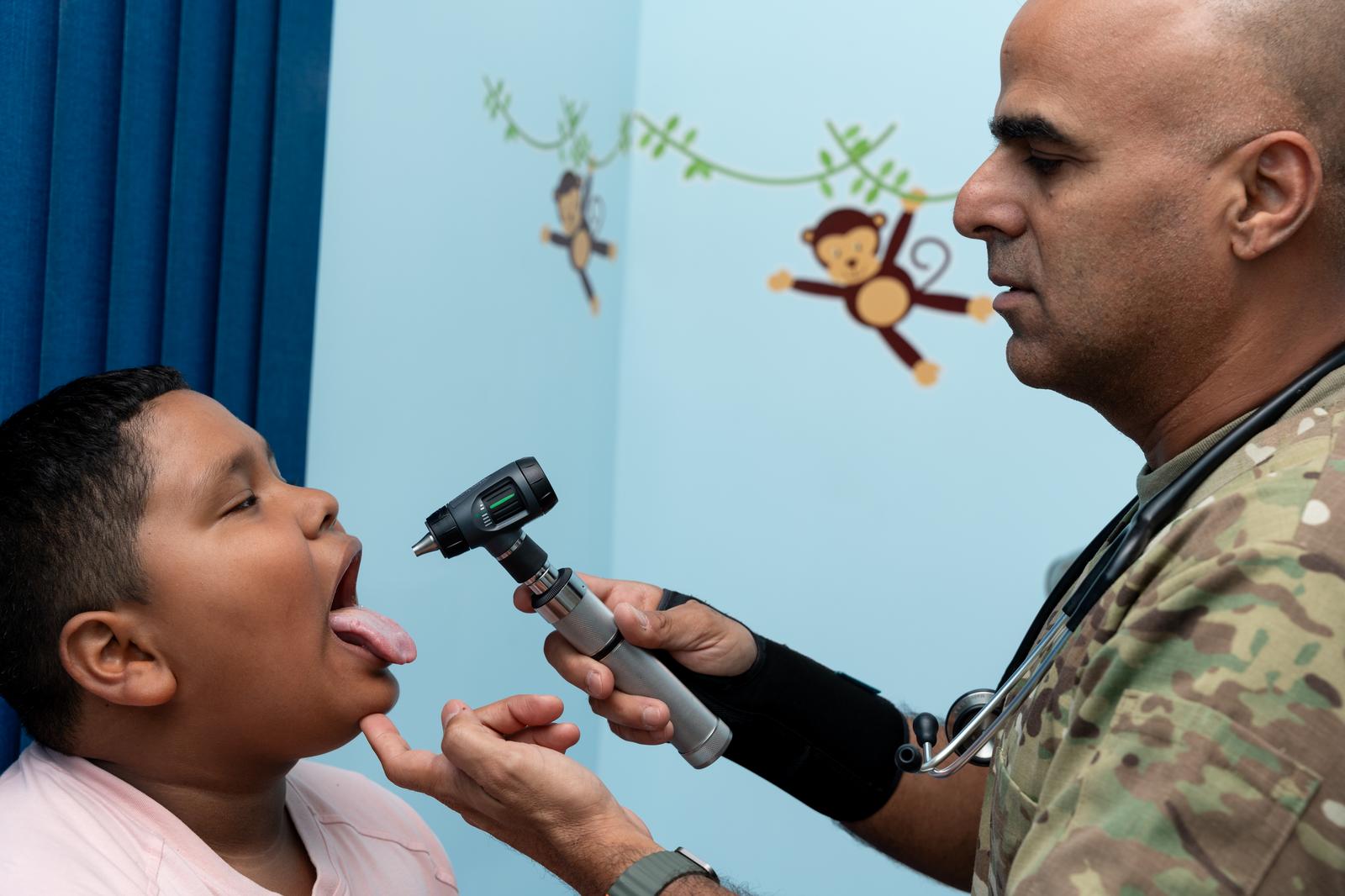
Lead photo. — U.S. Air Force photo by Staff Sgt. Joshua Hastings (Public domain). Source: el-salvadoran-health-care-workers-resist-privatisation-health-industry-1999-2000.jpg

The health-care workers refused to admit new patients and only treated emergencies. Eighteen additional public-sector unions under MOLI signed in support. Within a week, FMLN legislative deputies Jorge Schafik Handal and Humberto Centeno publicly backed the strike. [source: nv-database]
The unions escalated to mass marches. On December 8, 1999, doctors, peasants, community groups, and NGOs marched toward the presidential residence carrying banners reading “O Paga o se muere” — “either pay or die.” President Flores refused to meet the marchers. [source: nv-database]
On January 4, 2000, MOLI unions formed a new coalition — the Frente Sindical contra la Privatización — to coordinate the protest; on January 7, NGOs founded a parallel Movimiento de la Sociedad Civil contra la Privatización (MSCCP) that included treasury, water, pension, and energy workers. Solidarity strikes followed in seven government departments on January 13. A second mass march was held on January 14, joined by ANDES-21 de Junio public-school teachers and by the General Association of Public and Municipal Employees (AGEPYM) and the Electrical Sector Workers (STSEL). [source: nv-database]
By February, the campaign included not only unionized workers but also doctors and medical workers in private clinics. The combined effect shut down hospitals across all fourteen departments. Rallies and marches were held in San Vicente, San Salvador, Santa Ana, San Miguel, and Zacatecoluca. In early March, workers from eighteen MSPAS public hospitals joined in. [source: nv-database]
On March 6, riot police attacked protesters staging a sit-in in front of the ISSS Surgery Hospital and Hospital Rosales, the country’s two largest public hospitals, firing tear gas, pepper spray, water cannons, and rubber bullets; tear gas entered the wards and some patients suffered cardiac seizures. [source: nv-database]
On March 8, roughly 50,000 people marched toward the president’s home; police halted the marchers a few blocks short. Two days later, on March 10, the government formally agreed not to continue its privatization plans. On March 16, the FMLN won its largest-ever electoral victory. [source: nv-database]
Less than five months later, the government returned to partial hospital privatization, reneging on the agreement. [source: nv-database]
Key people & organizations
- SIMETRISSS (doctors’ union of the ISSS) and STISSS (ISSS workers’ union) — initial signatories
- Movement of Integrated Labor Organizations (MOLI) — the eighteen-union coordinating body
- Frente Sindical contra la Privatización — formed January 4, 2000
- Movimiento de la Sociedad Civil contra la Privatización (MSCCP) — formed January 7, 2000 with treasury, water, pension, and energy workers
- ANDES-21 de Junio, AGEPYM, STSEL — joining unions that broadened the strike
- Jorge Schafik Handal and Humberto Centeno — FMLN legislative deputies who publicly backed the strike
- Francisco Flores — the president whose privatization plan was first rescinded and then quietly resumed
Outcome
Verdict: lost.
The campaign won the March 10 agreement but lost the underlying demand: the source scores demand achievement as 0 of 6 because the government reneged on the agreement less than five months later, returning to partial privatization. [source: nv-database] Secondary wins were substantial — the FMLN’s largest-ever electoral victory, the formation of the MSCCP cross-sector coalition, and a substantial broadening of the anti-privatization movement.
Lessons
- A formal agreement to halt privatization has meaning only if the movement has an enforcement mechanism afterward; absent one, governments will quietly revert.
- A “marcha blanca” — uniform-color symbolism tied to a sector (here, white for medical workers) — is a powerful tool for amplifying sector-specific demands into national visibility.
- A movement that brings together unionized public workers, private-clinic doctors, peasants, and NGOs covers more institutional ground than the original sector alone could.
Sources
- Global Nonviolent Action Database — El Salvadoran health care workers resist privatization of health industry, 1999-2000 —
nv-database
Disclaimer: Included as a teaching example of campaign craft, not as endorsement.
Sources & verification
nv-database— grounding: primary — license: link-only / all-rights-reserved (ND-style; content paraphrased, not quoted)- Verified: 2026-07-04 by human