
Where it took place
| Type | Place |
|---|---|
| Region | Latin America |
| Country | Honduras |
Campaign at a glance
From 1994 to November 4, 1997, the Tacamiche farmers and workers resisted eviction by Chiquita Brands International after the company closed its banana plantation in retaliation for labor strikes. [source: nv-database] A three-year occupation that included illegal planting, sanctuary in the town’s three churches, an international pressure campaign run by FIAN-International, and protests at Chiquita’s US headquarters forced Chiquita and the Honduran government to rebuild 123 homes, two of the three demolished churches, and to invest over $80,000 in self-help industries. The campaign is scored as partial: the families secured housing but Chiquita retained a monopoly over most of the disputed land. [source: nv-database]
Tactics used
- nonviolent-occupation
- nonviolent direct action
- international-solidarity
- petitions
- declarations-by-organizations-and-institutions
Background
In June 1994, Chiquita Brands International closed its plantation in Tacamiche and three other farms in response to labor strikes over a large wage cut. The closure was illegal under Honduran law, which required companies to redistribute defunct plantation land to the people who lived there. The farmers who lived on the plantation had come to rely on it because of Chiquita’s effective monopoly on land use in the area. [source: nv-database]
Chiquita offered permanent workers $500 severance pay or relocation; 1,200 temporary workers were simply laid off. With no alternative land, the workers and their families chose to occupy the plantation. Instead of giving up a section of the 1,200 hectares that had become inoperable, Chiquita moved to evict them. [source: nv-database]
What happened
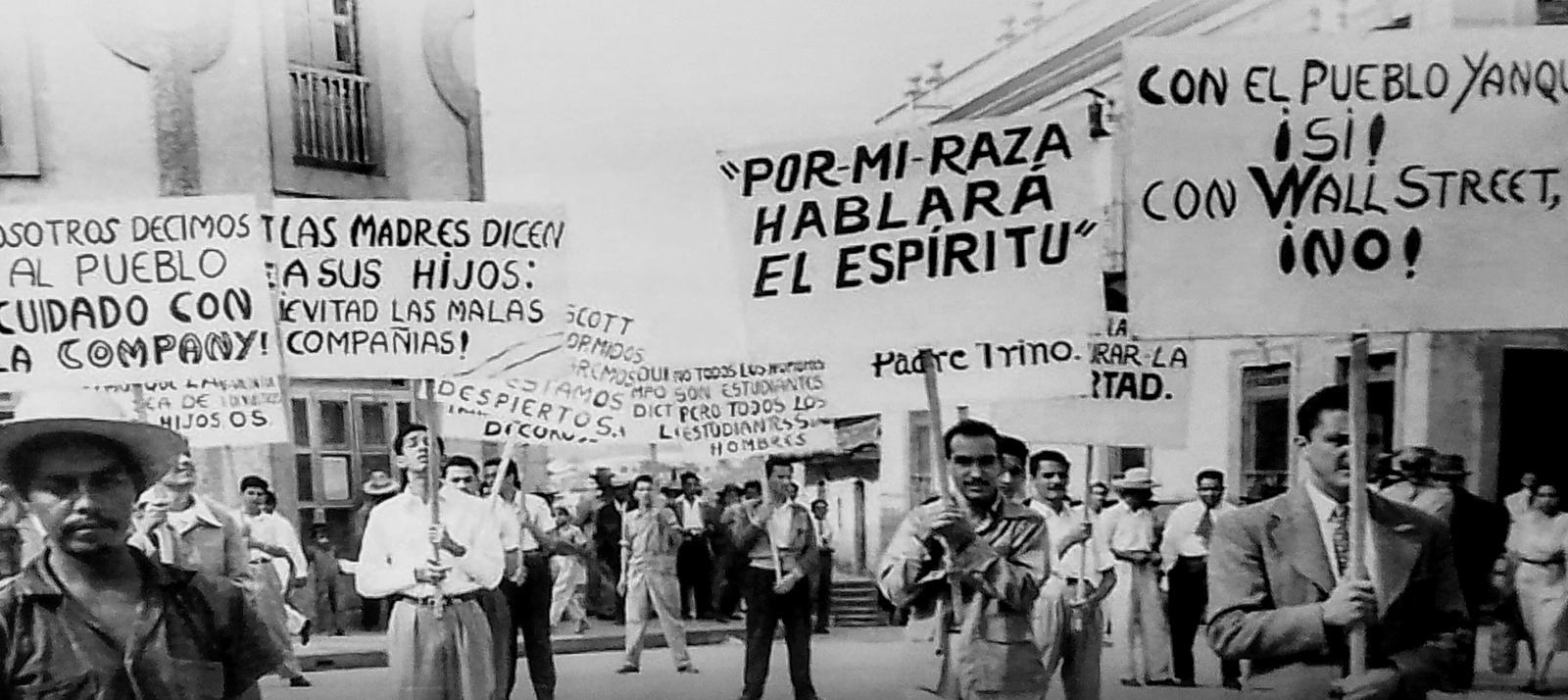
Lead photo. — Henry Guilbert (CC0). Source: hondurans-tacamiche-resist-eviction-chiquita-banana-company-1994-1997.jpg

On July 26, 1995, roughly a year after the initial occupation, four hundred police and soldiers arrived at Tacamiche, arrested 36 residents, injured about 75 more with tear gas, rubber bullets, and baseball bats, and destroyed 80 hectares of corn and beans planted by Jorge Antonio — a leader of one group of banana workers — and a group of farmers to feed the community. Some Tacamiches responded by throwing rocks at police, who retreated. The government extended the eviction date by a month to September 26, 1995. [source: nv-database]
The Tacamiches refused to retreat and, with supportive Honduran media attention, both maintained and expanded their occupation. By January 1996 they had moved on to other plantations such as Copén and occupied 50 hectares in total. The second eviction attempt came on February 1, 1996, when Chiquita received the approval of President Carlos Roberto Reina and the Honduran judiciary. This time the police gave no advance notice: 500 troops, a “field judge,” and over 400 workers hired by Chiquita made 100 arrests. Other Tacamiches hid in the town’s three churches while the hired men bulldozed subsistence crops, homes, the health post, and the three churches themselves. [source: nv-database]
With FIAN (FoodFirst Information and Action Network) coordinating, an adverse international reaction built accountability onto Chiquita. Chiquita initially responded with PR damage control but eventually re-built 46 huts; the government built a school and a health center. Both fell short of the promised electricity, running water, sewage systems, sports center, and compensation for the 123 families’ destroyed crops and belongings. [source: nv-database]
In protest, the Tacamiches refused to move into the town partially constructed by Chiquita. They crammed into a one-room community center in the nearby city of La Lima and began a public-relations campaign while subsisting on donations from friends, surrounding banana-plantation communities, and the local Catholic parish. After a year, they began to face malnutrition, unhealthy living conditions, and an epidemic of bronchitis. [source: nv-database]
In 1997, other communities in plantation areas began to stand up against eviction. Some claimed that their plight made them internal refugees under international law and threatened embassy occupations in Latin America and Europe. With FIAN-International and several other Honduran human-rights and campesino organizations supporting the nonviolent occupation, FIAN organized a writing campaign that generated over 10,000 letters to Chiquita CEO Carl Lindner and President Reina. FIAN also presented the case to the United Nations Committee on Economic, Social, and Cultural Rights in Geneva. Citizen protests in Cincinnati outside Chiquita’s US headquarters brought out 40 participants in the first action and 70 in the second. [source: nv-database]
On November 4, 1997, the families moved into 47 newly constructed shacks; shortly thereafter, Chiquita rebuilt another 76 homes and two of the three demolished churches. The government invested over $80,000 in self-help industries — a fish farm and concrete-block manufacturing — so that the Tacamiches could sustain themselves. The families were able to stay, but Chiquita retained a monopoly over most of the disputed land. [source: nv-database]
Key people & organizations
- Jorge Antonio — leader of one of the banana-worker groups; organized the first illegal planting to feed the community
- President Carlos Roberto Reina — whose approval was needed for the second eviction
- Carl Lindner — Chiquita CEO, recipient of FIAN’s letter-writing campaign
- FIAN (FoodFirst Information and Action Network) and FIAN-International
- The local Catholic parish and surrounding banana-plantation communities — provided donations and sanctuary
- The UN Committee on Economic, Social, and Cultural Rights — recipient of FIAN’s submission
- Cincinnati protesters — outside Chiquita’s US headquarters
Outcome
Verdict: partial.
The campaign secured rebuilt housing (123 homes), two of three demolished churches, a school, a health center, and $80,000 in self-help industries. [source: nv-database] However, Chiquita retained a monopoly over most of the disputed land, and the redistribution required by Honduran law was not completed. The campaign is scored as partial.
Lessons
- Land occupations work best when paired with a legal frame; here, the Tacamiches argued that Honduran law required redistribution of defunct plantation land, framing the occupation as a legal right rather than a land seizure.
- An international advocacy partner (FIAN) that can deliver 10,000+ letters and a UN submission converts a local land dispute into a corporate-reputation problem for the buyer.
- A post-eviction public-relations campaign that refuses to accept partial concessions can pressure the buyer to expand the settlement; here, the families’ refusal to occupy Chiquita’s shanties led to the larger 123-home rebuild.
Sources
- Global Nonviolent Action Database — Hondurans in Tacamiche resist eviction by Chiquita Banana company, 1994-1997 —
nv-database
Disclaimer: Included as a teaching example of campaign craft, not as endorsement.
Sources & verification
nv-database— grounding: primary — license: link-only / all-rights-reserved (ND-style; content paraphrased, not quoted)- Verified: 2026-07-04 by human