
Where it took place
| Type | Place |
|---|---|
| Region | Africa |
| Country | Nigeria |
Campaign at a glance
The Ogoni region is a highly oil-rich area in the Niger Delta area of Nigeria, populated by approximately 500,000 members of the Ogoni People. Since the Shell Petroleum Development Company discovered oil in Ogoniland in 1958, the region has been plagued with serious environmental degradation resulting from the over 100 oil wells in the area. [source: nv-database]
Tactics used
- marches
- group-lobbying
- vigils
- public-speeches
- declarations-of-indictment-and-intention
- declarations-by-organizations-and-institutions
- assemblies-of-protest-or-support
- singing
Background
Since 1990 the Ogoni have been engaged in a struggle with the government of Nigeria and the Shell Company to maintain their rights as the original inhabitants of the land. The nonviolent Movement for the Survival of the Ogoni People (MOSOP) has been met with violence on the part of the government as well as the assassination or imprisonment of many Ogoni leaders. Yet the Ogoni people have managed to force Shell Oil to withdraw from the area and have raised substantial international awareness of their situation. [source: nv-database]
What happened
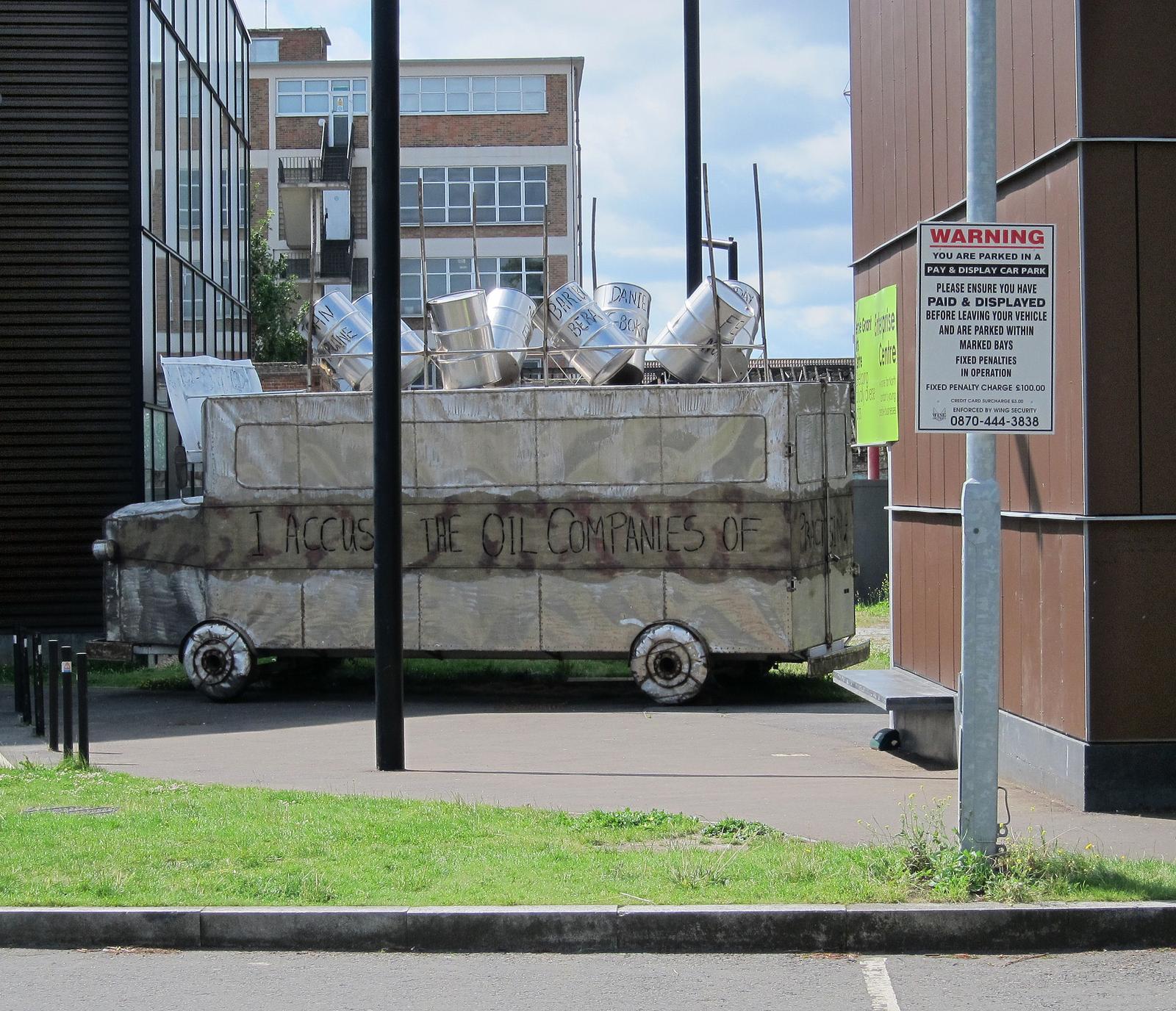
Bus memorial to Ken Saro-Wiwa, London — Alan Stanton (CC BY-SA 2.0). Source: ogoni-people-struggle-shell-oil-nigeria-1990-1995.jpg

MOSOP, led by its president Ken Saro-Wiwa—a well known environmental activist, author, and Nobel Peace Prize nominee— published the Ogoni Bill of Rights in 1990. This symbolically began the nonviolent struggle against the Nigerian government and the oil companies. The bill highlighted the Ogoni people’s lack of social services, their political marginalization, and the maltreatment they faced from the Shell Oil Company. The bill demanded environmental protection for the Ogoni region, self-determination for the Ogoni nation, cultural rights for the Ogoni people, representation in Nigerian institutions, and a fair proportion of the revenue from the sale of the region’s oil. In the years leading up to the escalation of the nonviolent conflict in 1992 and 1993, Ken Saro-Wiwa and MOSOP attempted to gain the support of international nongovernmental organizations. Early on MOSOP joined with the Unrepresented Nations and Peoples Organization (UNPO), which helped MOSOP gain increased international attention, both through the media and through meetings with the United Nations. As the UN’s Year of Indigenous People in 1993 approached, MOSOP planned protest actions to continue to push for the demands that had been laid out in the Ogoni Bill of Rights. In 1992, the conflict escalated after two years of little progress targeting an unresponsive national government. MOSOP decided instead to focus its energy on the three oil companies operating within the region: Shell, Chevron, and the Nigerian National Petroleum Company. Of the three, Shell easily had the largest share in the area and as such was MOSOP’s primary target. The group (supported by and comprised of many smaller Ogoni organizations) presented the companies with an ultimatum demanding 10 billion dollars in damages and royalties to the Ogoni people, as well as an immediate end to all three companies’ violence against the Ogoni region’s environment. MOSOP threatened that if its demands were not met it would rally the Ogoni people in widespread popular resistance to the companies’ presence. Apparently in response to this threat, the Nigerian government—which had recently undergone a series of military takeovers and tumultuous elections that the Ogoni had boycotted—announced that all disturbances of oil production were punishable as treason and banned all public meetings and assemblies. Despite the ban on public asse. [source: nv-database]
Key people & organizations
- Ken Saro-Wiwa [source: nv-database]
- Movement for the Survival of the Ogoni People [source: nv-database]
- Ethnic Minority Rights Organization of Africa [source: nv-database]
- Federation of Ogoni Women Association [source: nv-database]
- National Youth Council of Ogoni People [source: nv-database]
- Ogoni Council of Churches [source: nv-database]
- Council of Ogoni Traditional Rulers [source: nv-database]
- Council of Ogoni Professionals [source: nv-database]
- National Union of Ogoni Students [source: nv-database]
- Crisis Management Committee [source: nv-database]
Outcome
Verdict: won.
Per the source’s scoring rubric, the campaign scored 3 out of 6 points on achieving specific demands/goals, 1 out of 1 points on survival, and 3 out of 3 points on growth — for 7 out of 10 points overall. [source: nv-database]
Although the Ogoni community did not gain independence from Nigeria nor access to much needed social services, it was able to remove the Shell oil company from the region. They also were given a settlement of $15.5 million from Shell Oil several years later. Although many leaders of the MOSOP were killed or arrested during the campaign, the MOSOP group itself is still very active today. The campaign grew to incorporate many allies and partners, especially international ones. Budget also increased with the organization of the One Naira Ogoni Survival Fund, and by 1993, 3/5 of the Ogoni population participated in a single action. [source: nv-database]
Lessons
- Sustained, broad-based nonviolent mobilization can win measurable concessions even against entrenched regimes.
- Although the Ogoni community did not gain independence from Nigeria nor access to much needed social services, it was able to remove the Shell oil company from the region. [source: nv-database]
- Public marches and assemblies create visibility but require shielding from state repression to remain effective.
Sources
- Global Nonviolent Action Database —
nv-database
Disclaimer: Included as a teaching example of campaign craft, not as endorsement.
Sources & verification
nv-database— grounding: primary — license: link-only- Built: 2026-07-04 from GNVAD content via T1 balance pipeline.